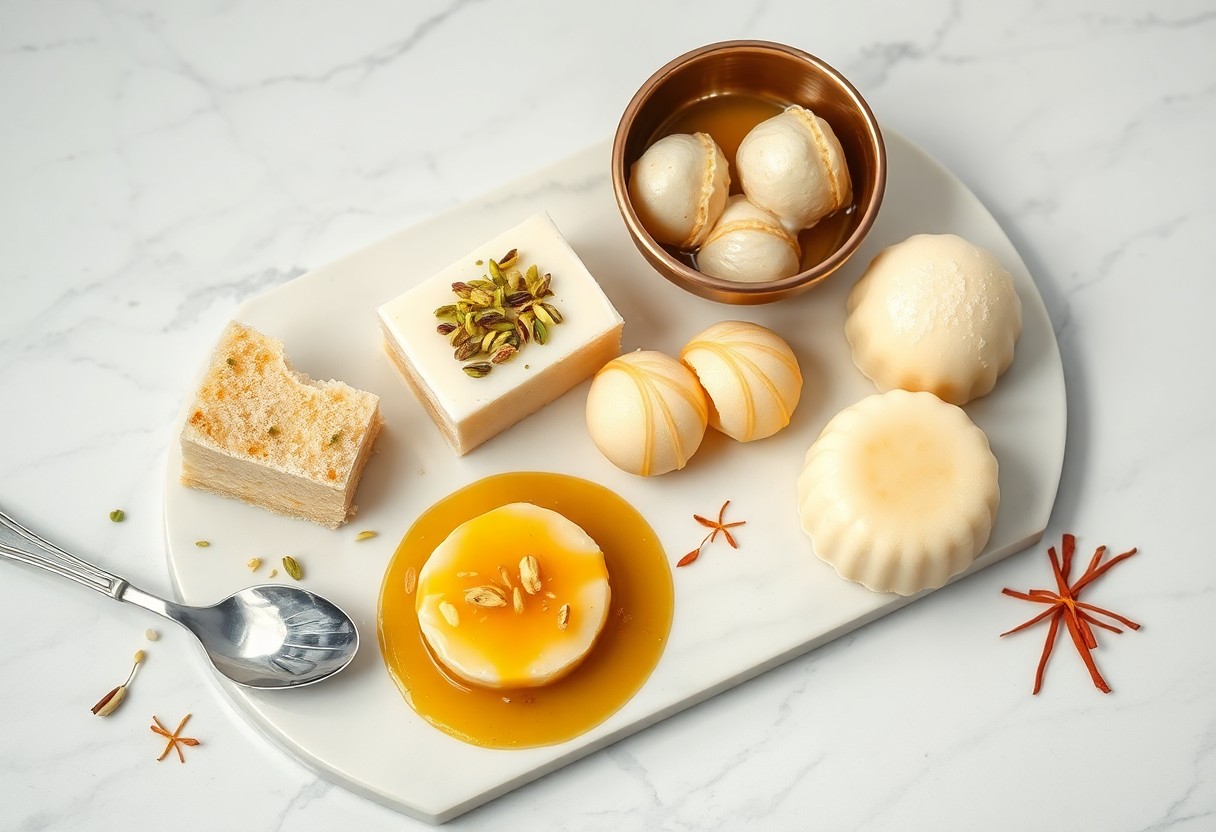
Most milk-cake lovers should try rasgulla, rasmalai, peda, kalakand, and sandesh; you will appreciate their concentrated milk flavors, varied textures, and regional techniques.
The Culinary Science Behind Milk-Based Sweets
Milk chemistry determines texture and sweetness: you control water content, fat, and protein concentration to guide curd formation, caramelization, and mouthfeel; precise heat and stirring let you tailor milk-based sweets from creamy burfi to grainy milk cake.
The role of the Maillard reaction in flavor development
Maillard interactions between milk amino acids and reducing sugars create the complex nutty, toasty flavors you associate with browned milk sweets; you encourage these notes by slow, steady heat and by concentrating proteins without burning them, balancing time and temperature.
Achieving the signature “Danedaar” grainy texture
Grainy “danedaar” texture forms when milk solids aggregate into distinct granules; you coax this by simmering long, scraping solids against the pan, and occasionally adding a splash of acid or ghee to separate curds while keeping them firm rather than smooth.
You achieve consistent danedaar by reducing full-fat milk slowly until solids concentrate, stirring vigorously to separate curds, then rubbing portions between your palms or pressing them through a sieve to size the grains. Adding a small amount of acid helps curd formation; finished granules are fried briefly in ghee to lock texture and deepen flavor. Timing sugar addition matters: add it after initial grain formation to avoid dissolving the granules.
Kalakand: The Freshness of Artisanal Chenna
Silky chenna folded with sugar gives you Kalakand’s fresh, grainy-smooth texture that melts on your tongue while balancing milky sweetness with a gentle cardamom hint.
Defining characteristics of the soft-set fudge
Texture is delicate, so you notice fine curd grains, slight moisture, and a tender, creamy bite that distinguishes Kalakand from denser milk sweets.
Why it serves as the closest relative to Milk Cake
Origins in milk reduction and fresh chenna make it familiar to you, sharing caramelized-sugar notes and a soft crumb that echoes Milk Cake’s dairy-forward profile.
Composition explains why you sense the kinship: both rely on concentrated milk solids and careful sugar integration, so you taste deep dairy richness, while Kalakand’s chenna preserves a lighter, fresher finish compared with Milk Cake’s firmer, more caramelized body.
Mathura Peda: The Essence of Caramelized Khoya
Mathura peda’s caramelized khoya delivers toffee-like depth and a grainy, melt-in-your-mouth texture you’ll recognize if milk cake is your favorite; subtle ghee notes balance its burnt-sugar sweetness.
Traditional roasting methods of the Braj region
Braj artisans roast khoya slowly over charcoal or wood so you can taste mild smoke, deeper browning, and concentrated milk sugars that define authentic peda.
Flavor similarities born from intense milk reduction
Caramelization of milk solids produces nutty, lingering notes you’ll notice across Mathura peda and milk cake, linking them through intense milk reduction and toasted sweetness.
Comparing these sweets reveals shared Maillard-driven aromas, toasted lactose, and dense, slightly granular textures that you can trace to prolonged heating and moisture loss. You can contrast Mathura peda’s granular khoya with milk cake’s smoother, sugar-crystallized finish while noting similar toffee-like and nutty cues.
Rabri: A Study in Concentrated Dairy Layers
Rabri condenses milk into layered malai and intense sweetness, giving you a spoonable texture that mirrors Milk Cake’s creamy depth while staying uniquely silky and aromatic.
The slow-simmering process and Malai collection
Simmering milk over low heat lets malai form and rise; you skim and collect each creamy sheet, folding them back to thicken the mixture and build that signature, layered mouthfeel.
Infusing aromatics for a sophisticated profile
Cardamom and saffron are classic additions; you introduce them late in the warm stage so the fragrances meld gently with the condensed milk without overpowering its natural sweetness.
Try steeping two lightly crushed green cardamom pods and a small pinch of saffron in warm rabri for ten minutes, then strain; you can also bruise a pod for subtler release or tie rose petals in muslin for floral notes. Taste as you go, since concentrated milk magnifies spices-add sparingly to preserve balance.
Basundi: The Fluid Elegance of Western India
Basundi coats your spoon with velvety reduced milk, scented with cardamom and saffron, served warm or chilled for a luxuriously light finish.
Distinguishing Basundi from standard Rabri consistency
Rabri forms thicker, layered cream while Basundi remains pourable; you identify Basundi by its smooth, evenly reduced texture and subtle spice.
Regional variations and classic dessert pairings
Across western kitchens, Basundi shifts in sweetness, spice intensity and nut garnish, and you often serve it alongside puris, malpua, or fresh fruit for contrast.
Maharashtra favors a thinner, lightly spiced Basundi, Gujarat leans toward richer, denser versions studded with pistachios and almonds, and you can pair each regional style with crisp fried breads, syrupy jalebi, or seasonal fruits to balance the milk’s sweetness and texture.
Malai Ghevar: The Royal Rajasthani Masterpiece
Malai Ghevar’s disc of crisp fried batter soaked in saffron syrup and topped with malai sends you straight to Rajasthan’s royal kitchens, offering layered textures and a gentle sweetness that complements milk cake’s richness.
Engineering the honeycomb texture for syrup absorption
Honeycomb-like pockets trap syrup, so you experience bursts of sweetness; you should notice how the fried batter’s open structure and controlled frying create rapid absorption without sogginess.
How the thickened milk topping elevates the experience
Silky malai crowns the ghevar, and you taste creamy density against crisp layers, balancing sweetness while adding dairy warmth that mirrors milk cake’s signature comfort.
Layered rabri, reduced until creamy and scented with cardamom, adds nutty pistachio flecks so you get a melt-in-mouth finish that softens the crisp shell and unifies each bite.
Conclusion
Considering all points you can confidently explore rasgulla, peda, kalakand, sandesh, and gulab jamun if you love milk cake; each delivers creamy textures, varied sweetness, and regional character that enrich your tasting choices.