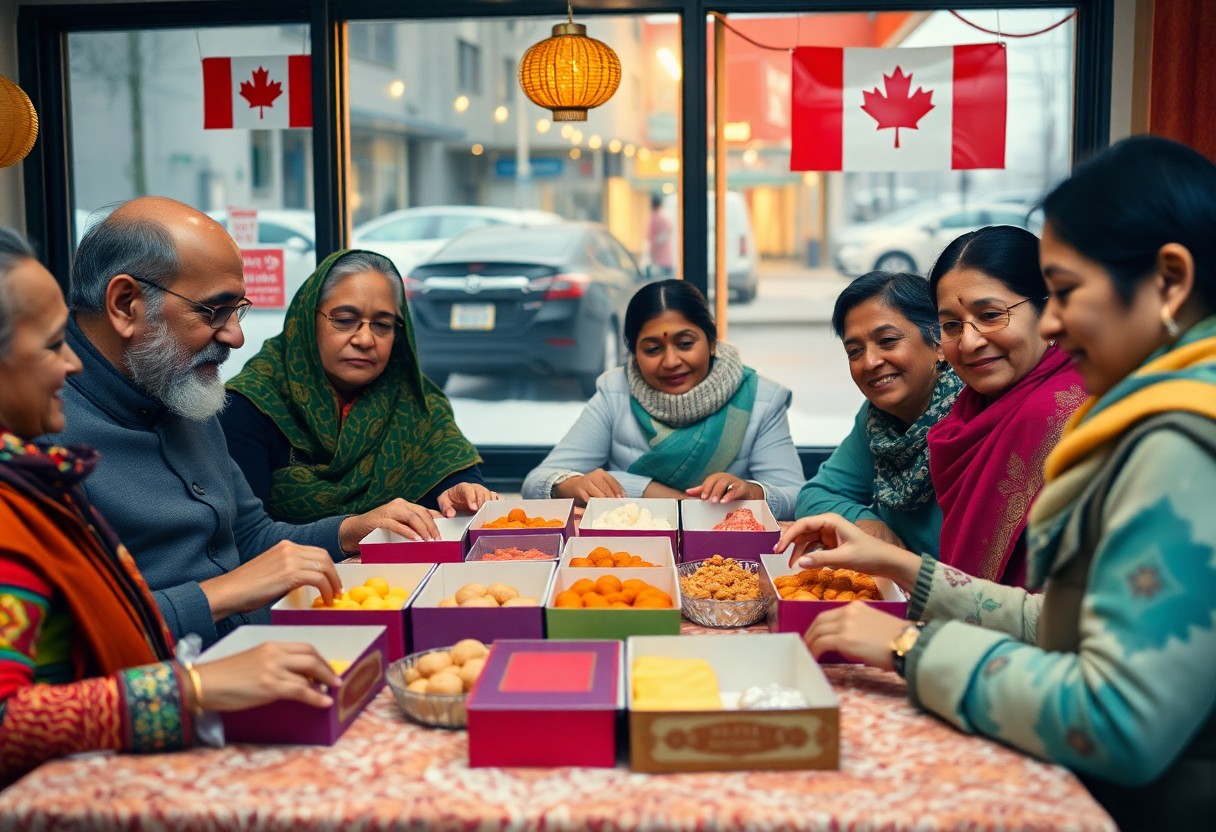
Just as the aroma of gulab jamun, ladoo, and jalebi draws neighbors indoors, Indian sweets anchor family rituals in Brampton and across Canada, where you pass recipes, stories, and traditions from elders to children; you gather for festivals, weddings, and casual visits around shared plates; local sweet shops and community events help you reconnect with heritage, bridging generations and distant relatives into a single, celebratory table.
The Cultural Significance of Indian Sweets
You bring sweets to mark births, weddings, housewarmings and festivals, and their presence signals hospitality and social reciprocity. During Diwali many families prepare 5-10 varieties-laddoo, barfi, kaju katli-then distribute boxed assortments to neighbors and colleagues. You see sweets used as currency of gratitude at gurdwaras and temples, offered in prasad lines that may serve hundreds, and shared at multicultural potlucks where a single tray can spark conversations across generations.
Historical Background
You trace many recipes to Mughal kitchens and earlier caravan routes that spread sugarcane; modern chhena-based sweets emerged in 19th-century Bengal when Nobin Chandra Das refined rasgulla (c.1868). You will find khoa-based mithai evolving in royal courts into dense barfis and pedas, while jaggery and millet sweets persisted in rural diets, often passed down through 3-5 family generations as household heirloom recipes.
Regional Variations
You notice sharply different palettes by region: Bengal and Odisha prize spongy chhena rasgulla; Punjab favors rich milk solids like peda and gulab jamun; Gujarat and Rajasthan excel in gram-flour sweets like mohanthal; South India gives you Mysorepak and adhirasam with rice and ghee. You can expect more than a dozen signature sweets within any broad regional cuisine, and each carries local ingredients and festivals.
You can taste technique differences when comparing syrup-soaked jalebi to condensed-milk burfi: chhena is acid-coagulated, khoa is reduced milk, jaggery brings earthy notes used in winter laddoos, and coconut or rice dominate coastal sweets. In diaspora hubs like Brampton, vendors often stock 20+ regional varieties so your family can source Kolkata-style rasgulla alongside Kerala ada, enabling authentic celebrations and interregional exchange within a single community.
Festivals and Celebrations
Diwali and Its Sweet Traditions
Diwali’s five-day festival centers on lights and mithai. You often exchange boxes of kaju katli, motichoor ladoo, barfi and jalebi; in Brampton shops extend hours and sell mixed mithai assortments with 4-8 varieties. Neighbourhood temples and community centres distribute sweets to hundreds at local Diwali events, and you may bring 2-3 gift boxes when visiting extended family.
Weddings and Family Gatherings
At Indian weddings you see multi-day celebrations where sweets signal blessings and hospitality. Hosts commonly serve gajar halwa, rasmalai and motichoor ladoo to 150-400 guests; Brampton caterers typically provide 3-6 traditional desserts plus fusion options like mithai macarons or cardamom cheesecake, and boxed shagun is handed out during ceremonies.
Plan logistics by ordering sweets 2-3 weeks ahead and allocating about 50-75 grams of mithai per guest so a reception for 200 is properly covered. Local vendors will offer per-guest packaging, shelf-life guidance and customisation for favour boxes; you should schedule a tasting to confirm sweetness levels, portion sizes and any dietary needs (eg. nut-free or vegan) before finalising quantities.
The Role of Sweet Shops in Community
Local Businesses in Brampton
In Brampton, with over 600,000 residents, you rely on dozens of family-run sweet shops along corridors like Steeles and Queen Street to supply festival orders and everyday treats; many owners have operated for 20-40 years, expanding from a single storefront to multiple locations. During Diwali and Vaisakhi you’ll notice order volumes and staffing rise sharply, and your neighborhood shop often doubles as a community bulletin board for events and charity drives.
Connection to Heritage
You see heritage preserved when recipes passed down three generations-mithai techniques using khoya, ghee, and hand-rolled laddoo-arrive on your table; elders train younger family members in the shop’s kitchen, keeping regional methods alive. Shops label sweets in Punjabi, Hindi, or Gujarati, which helps your elders recognize familiar flavors and reinforces cultural continuity in a new country.
You also witness regional diversity: your local sweet shop stocks Punjabi barfi, Bengali sandesh, South Indian Mysore pak, and evolving fusion items like mango kulfi cheesecake. That variety lets you celebrate specific hometown tastes at weddings and seasonal gatherings, while younger customers introduce innovations that keep traditions relevant across Canada.
Family Recipes and Their Importance
Your family recipes act as living archives: many Brampton households pass down sweets like gajar ka halwa, besan ladoo and jalebi across 2-3 generations, some recipes dating 40-60 years. They encode techniques-ghee temperature, sugar syrup consistency-that you can’t read in a cookbook. Handwritten cards, WhatsApp photo threads and weekend kitchen lessons keep those measurements, timings and stories intact.
Passing Down Traditions
Elders teach you to test syrup by the drop, knead dough by feel and time roasting for 7-10 minutes until aroma signals doneness. Weekend classes at community centers and temple kitchens in Brampton run apprenticeship-style sessions for kids aged 8-16, while families still rely on hands-on demonstrations during Diwali, Eid and Vaisakhi to preserve tactile skills.
Personal Stories and Memories
Connections form through recipes tied to names, dates and events: you trace your grandmother’s besan ladoo back to the 1970s, follow an aunt’s wedding barfi adapted during migration, or laugh about a sibling who perfected gulab jamun after 50 trial batches. Those concrete stories turn flavors into personal heirlooms you can both taste and tell.
To preserve them, you record elders on your phone, save step-by-step photos to WhatsApp groups and compile handwritten cards into family binders. Community initiatives in Brampton collect dozens of these recipes at temple bazaars and school cultural fairs, pairing each recipe with the storyteller’s name and year so you inherit technique alongside the life story behind every sweet.
The Popularity of Indian Sweets in Canada
You can trace the surge in demand to concentrated South Asian communities-over 2.5 million people of South Asian origin live across Canada-anchored in Brampton, Toronto, Mississauga and Surrey. Festivals such as Diwali and Vaisakhi drive seasonal spikes, while everyday occasions like birthdays and office celebrations keep sales steady. Supermarkets now dedicate entire aisles to mithai ingredients, and specialty sweet shops multiply, making Indian desserts a regular presence on Canadian dessert tables.
Demographic Changes
Immigration patterns and growing multi‑generational households have reshaped tastes: you encounter both elders seeking traditional peda and younger family members open to hybrids. Ontario holds the largest share of South Asian Canadians, and Brampton is among the fastest‑growing cities, so local demand reflects family gatherings, community events, and cultural continuity across ages.
Fusion Desserts and Modern Trends
Chefs and bakers are blending techniques: you’ll spot gulab jamun cheesecakes, jalebi donuts, masala‑chai macarons and maple‑rasgulla on menus. Social media amplifies viral creations, while cafés and catering companies add mithai‑inspired items to brunch and corporate menus, expanding the audience beyond South Asian shoppers into mainstream culinary curiosity.
On a practical level, adaptations use Canadian ingredients-local dairy and maple, seasonal berries and artisanal flours-to meet quality and cost targets; you notice packaging tailored for gifting and bulk corporate orders. Collaboration between traditional sweet shops and modern patisseries is common, and those hybrid offerings often sell out quickly at weekend markets and festival pop‑ups, proving demand isn’t just nostalgic but commercially scalable.
Health Considerations and Adaptations
You can adapt traditional sweets without losing their role in family gatherings by reducing added sugar and reworking fats. Health Canada and WHO advise keeping free sugars under 10% of daily calories, so many home cooks in Brampton halve sugar in gulab jamun or swap refined sugar for jaggery. Local bakeries also offer low‑sugar barfi and plant‑based rasmalai, letting you share familiar flavors while managing blood sugar and saturated‑fat intake.
Traditional vs. Contemporary Ingredients
You’ll notice khoya and ghee dominate classic recipes-ghee has about 112 kcal per tablespoon and is high in saturated fat-while contemporary versions use reduced‑fat milk, evaporated or plant milks, and small amounts of light oils. Substitutes like jaggery, date paste, erythritol blends, almond or chickpea flour lower glycemic load and preserve texture. Brampton chefs and home bakers increasingly use these swaps to make peda, barfi, and ladoo more suitable for diverse dietary needs.
Balancing Enjoyment and Health
You can enjoy mithai by controlling portion and context: limit servings to one small piece (about 30-50 g), pair sweets with protein or fiber-such as roasted chana or yogurt-to blunt glucose spikes, and eat sweets after a balanced meal rather than on an empty stomach. Evidence shows combining carbs with protein moderates post‑prandial glucose, so these habits help you celebrate without large blood‑sugar excursions.
For more control, adopt family strategies like sampler platters so guests taste multiple items without large portions, alternate high‑sugar sweets with fresh fruit, and wait 20 minutes before seconds to assess fullness. Many Brampton caterers now list sugar per piece or offer 30-40% reduced‑sugar options; pairing those choices with a post‑meal walk keeps gatherings both joyful and health‑minded.
Summing up
From above, you see how Indian sweets serve as a cultural bridge in Brampton and across Canada, uniting families through shared rituals, festive exchanges, and local bakery gatherings; your celebrations, intergenerational recipes, and communal tastings reinforce identity, foster conversation, and create lasting memories that strengthen familial bonds nationwide.