You can reconnect with your cultural roots through Traditional Indian Sweets Canada, which brings authentic recipes, time-honored techniques, and locally sourced ingredients to Brampton. Their selection-from milk-based mithai to syrupy jalebi and fragrant peda-supports celebrations, catering, and daily indulgence, while ensuring consistent quality, fresh preparation, and guidance for special orders so your festive moments truly taste like home.
The Importance of Traditional Indian Sweets
You rely on traditional sweets to anchor family memory and regional identity: ladoo, barfi, jalebi, gulab jamun and rasgulla each signal specific textures, occasions and home regions. Recipes are often passed down 3-4 generations, and Brampton shops stock dozens of varieties year‑round so your palate can revisit Punjab, Bengal or Gujarat without leaving the city.
Cultural Significance
You use sweets as offerings and social currency-modak for Ganesh Chaturthi, payasam at South Indian ceremonies, sandesh or rasgulla in Bengal-marking births, weddings and housewarmings. Temples distribute prasadam, families present mithai to elders, and immigrant bakeries adapt flavors so your rituals and gestures of hospitality stay authentic.
Celebrations and Festivals
At Diwali you buy mithai gift boxes-often 6-12 pieces-featuring ladoo, barfi and kaju katli, while Holi centers on gujiya and colorful confections. Weddings commonly display 8-15 varieties, and Raksha Bandhan favors dry sweets that travel well; festival demand drives local shops to scale production and curate regional assortments for your celebrations.
During peak windows-typically 1-2 weeks before Diwali and Holi-shops hire seasonal staff and set order cutoffs 5-10 days ahead for custom trays. You should plan around shelf life: dry sweets like kaju katli keep about 10-14 days, whereas syrupy rasgulla or gulab jamun need refrigeration and are best consumed within 2-3 days, which shapes gifting and shipping choices.
Popular Traditional Indian Sweets
You’ll find classics like gulab jamun, jalebi, ladoo and barfi across Brampton bakeries and sweet shops; regional twists matter – for example, besan ladoo vs coconut ladoo – and many vendors report selling 50-200 pieces per day during festival weekends, reflecting steady demand and diverse customer preferences.
Gulab Jamun
When you order gulab jamun here, you’ll often get khoya-based or milk-powder balls fried to a deep golden and soaked in rose- and cardamom-scented syrup; traditional technique calls for one-thread syrup and gentle simmering, and shops commonly serve them warm with chopped pistachios for texture and visual appeal at weddings and Diwali spreads.
Jalebi
In Brampton you’ll see jalebi made from a maida-and-yogurt batter fermented 4-6 hours, piped into hot oil as concentric coils, then immersed in a 1:1 sugar syrup boiled to one-string consistency; vendors often pair it with rabri or sell it as a street-breakfast item, moving dozens per hour on busy mornings.
You can compare regional variants directly: northern jalebi tends to be thinner and crispier, while imarti (made from urad-dal batter) produces thicker, chewier loops; observing color, syrup saturation and serving accompaniments like rabri helps you distinguish style, freshness and vendor technique.
Ingredients and Preparation
Common Ingredients
You’ll find staples such as ghee, khoya (milk solids), jaggery or sugar, and flour types like besan and maida across recipes. Cardamom, saffron and rose water provide aromatics, while nuts-almonds, pistachios and coconut-add texture. For example, gulab jamun needs khoya and sugar syrup, laddoos rely on besan or semolina, and barfi uses condensed milk or khoya; most home recipes use 5-7 ingredients for authentic flavour.
Traditional Cooking Techniques
Often techniques hinge on heat control: slow roasting (bhuna) for besan or khoya, deep-frying at medium heat for dough-based sweets, and simmering sugar syrup to a single-string consistency. You’ll also use a bain-marie for rabri and gentle folding to retain air in batters. Timing-minutes rather than exact temperatures-and sensory cues like aroma and colour guide the process more than thermometers.
For example, when making gulab jamun you knead khoya into a smooth dough, shape small balls and fry until light golden before soaking in 1:1 sugar syrup; jalebi batter is often fermented 6-8 hours for tang, then piped and fried into spirals; semolina halwa requires roasting suji 7-10 minutes until nutty, then gradual addition of hot milk or water to avoid lumps.
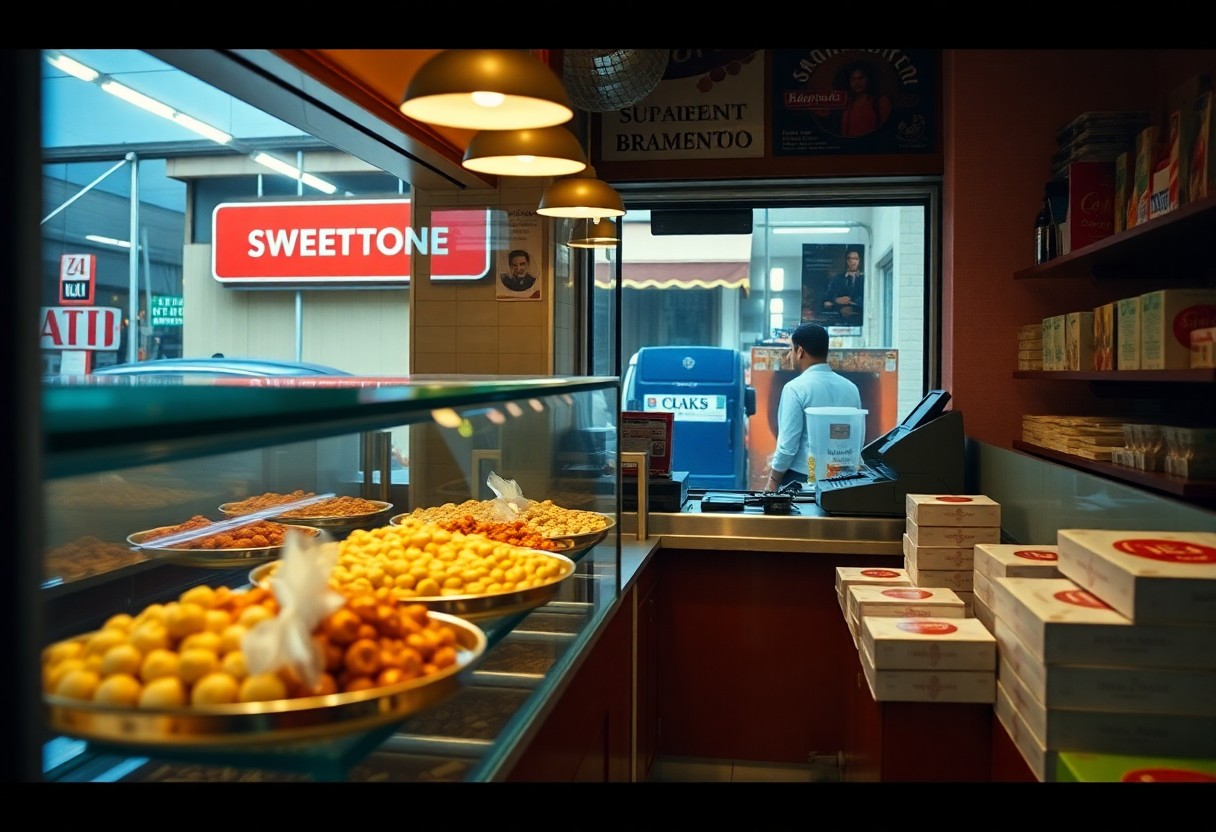
The Growth of Indian Sweet Shops in Brampton
Across Brampton you’ve seen an uptick in specialty mithai shops and hybrid bakeries, with 30+ storefronts clustered around Main, Kennedy and Sandalwood corridors. Many businesses expanded from small family counters to offer online ordering and wholesale to catering services, and you can now find curated gift boxes, fusion sweets and subscription plans that reflect a shift from purely walk-in sales to year-round, diversified revenue streams.
Local Businesses
You’ll encounter family-run shops that employ 8-12 staff alongside small chains that operate 2-5 locations; these businesses balance traditional recipes with scalable systems, using central kitchens for wholesale and retail outlets for premium packaging. Several owners report steady year-over-year growth by adding delivery through apps and catering for 50-200-person events, turning local expertise into replicable operations without losing heritage flavors.
Community Impact
Sweet shops shape your community by supplying festival orders, sponsoring cultural events and creating seasonal jobs-many shops double production for Diwali and Vaisakhi, hiring 20-50 temporary workers. Beyond sales, they supply temples, gurdwaras and schools with discounted mithai platters, and you’ll often see owners involved in fundraising drives and local sponsorships that keep cultural programming vibrant.
In practice, your neighborhood sweet shop becomes a social hub: owners coordinate bulk orders for langars, partner with event organizers for Brampton’s Diwali melas, and collaborate with local grocers to stock specialty items. This network effect funnels revenue back into community venues and supports entrepreneurship, apprenticeships and skills transfer for younger bakers learning traditional techniques.
How to Select Quality Sweets
Tips for Choosing Fresh Sweets
When choosing fresh sweets you should inspect color, texture and packaging dates; milk-based items like rasgulla keep 2-3 days refrigerated while sugar solids like kaju katli last 7-10 days at room temp.
- Check manufacture and expiry dates
- Ask for a sample-2 pieces to test texture
- Smell for sour notes; avoid sticky or slimy feel
After testing, prefer vendors who rotate stock daily.
Recognizing Authenticity
To recognize authenticity you can check ingredient lists and sensory cues: genuine khoya is made from reduced milk solids rather than reconstituted milk powder; pure ghee gives a nutty aroma, and saffron appears as thin red strands not orange dust. Packaged sweets in Canada must display a Nutrition Facts table and ingredient list, so use that information when buying imported mithai.
You should ask vendors about preparation-if they make khoya onsite they’ll often describe continuous reduction of milk into dense solids and you can sometimes see batch photos or trays; sample a small piece to assess mouthfeel. Verify visible ingredients: whole pistachio flecks and cashew texture indicate real nuts, while overly uniform color suggests heavy dye. Also confirm storage practices-quality shops keep milk sweets refrigerated at about 4°C to maintain safety and flavor.
The Future of Traditional Indian Sweets in Canada
You can expect wider distribution as Brampton mithai makers scale into the Greater Toronto Area and e-commerce; festival-driven demand often doubles for many shops during Diwali, prompting investments in cold-chain logistics, batch tracking, and partnerships with Toronto culinary programs to preserve flavor at scale.
Trends and Innovations
You’re seeing fusion items like mango kulfi cheesecake, cardamom‑infused donuts, and low‑sugar besan ladoos appear alongside classics; subscription boxes, QR-coded sourcing, and allergen-free and vegan variants are increasing weekday online orders beyond seasonal spikes.
Preserving Tradition
You’ll notice family-run shops keeping 3-4 generation recipes intact by continuing hand-rolling laddoos and slow-cooking jalebi while meeting provincial food-safety rules through pasteurization and documented standard operating procedures.
To sustain authenticity you can look for producers who document ratios, ghee and khoya sources, and batch records; in Brampton, several mithai stalls turned caterers train staff using those archives and community workshops, ensuring techniques like milk reduction for khoya transfer reliably as operations grow.