Ladoo opens a delightful pathway as you navigate Brampton’s vibrant sweet shops, where rich besan, melt-in-your-mouth gulab jamun and syrupy jalebi reflect regional techniques and fresh ingredients; this guide helps you identify authentic flavours, best storefronts, seasonal specialties and what to order so you can confidently taste and compare the city’s top Indian confections.
The Rich Tradition of Indian Sweets
Across centuries, Indian mithai weave into your festivals, weddings and daily rituals, offering hundreds of distinct recipes from syrupy jalebi to milk-rich barfi. You find sweets marking Diwali, Eid and regional fairs, and shops in Brampton mirror that diversity with classic laddoos, kaju katli and Bengali-style sandesh. This living tradition blends ceremonial purpose, local ingredients and evolving tastes into every bite.
Historical Significance
Tracing sweets back shows how royal kitchens and temple offerings shaped them; Mughal courts (16th-18th centuries) popularized rich milk- and nut-based confections, while temple prasads sustained simple jaggery- and coconut-based recipes. You can see legacy in recipes: peda and barfi from royal patronage, rasgulla gaining fame in 19th-century Bengal, and regional street sweets evolving from medieval cookbooks into modern specialties.
Regional Variations
Different regions developed signature techniques you can taste: chhena-based sweets (sandesh, rasgulla) in Bengal, khoa/mawa confections (pedha, gulab jamun) in North India, and coconut or jaggery treats in the South. You’ll notice spices like cardamom or saffron used variably, and textures shifting from grainy laddoos to silky barfis depending on local dairy processing and ingredient availability.
Diving deeper, you observe technique-driven differences: Bengal’s chhena is acid-coagulated milk kneaded into soft curds, producing the springy texture of rasgulla, while North Indian khoa is slowly reduced milk giving dense, melt-in-mouth pedas and gulab jamun. You’ll also find regional sugar choices-jaggery in rural west and palm sugar in some southern recipes-that change flavor profiles, and frying versus steaming methods that alter moisture and shelf life.
Popular Indian Sweets in Brampton
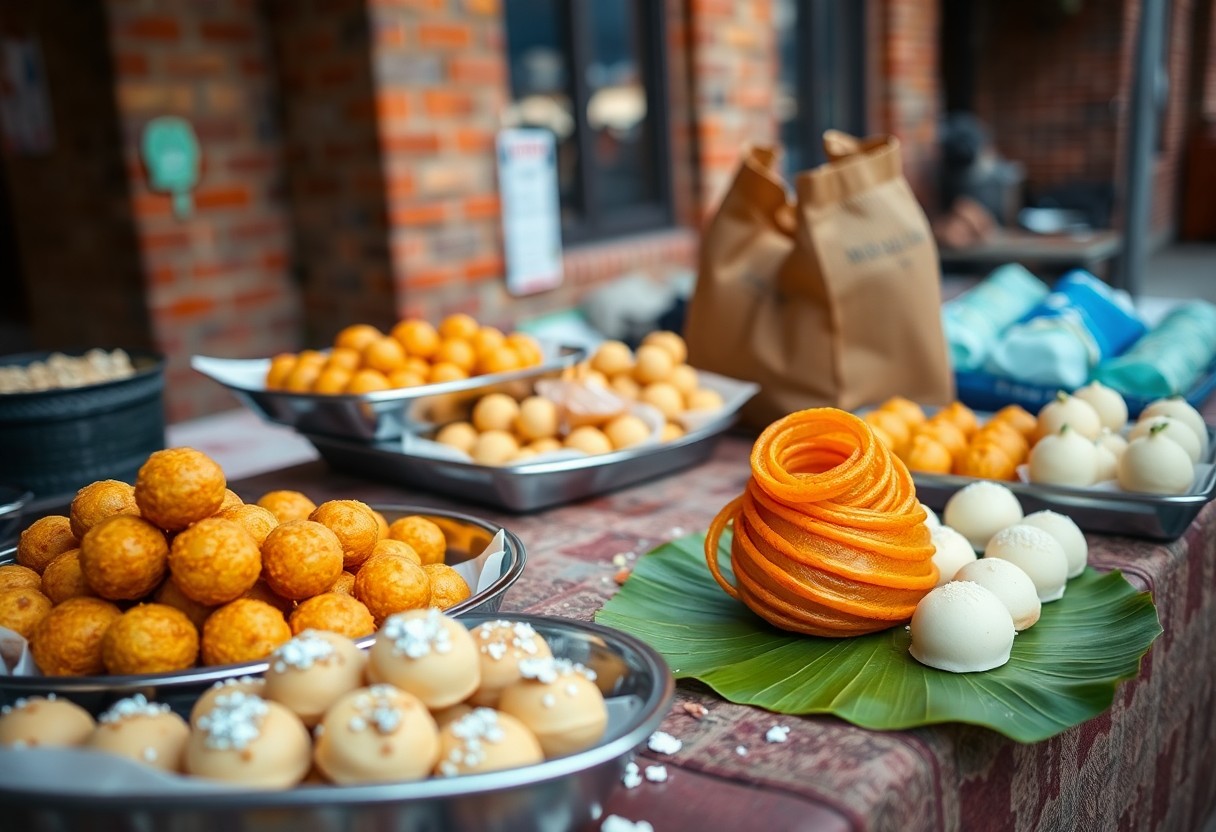
When you wander Brampton’s sweet shops, you’ll spot staples like ladoo, jalebi, gulab jamun, and barfi; local mithai counters often arrange them in colorful trays for festivals. Many vendors showcase seasonal specialties during Diwali and weddings, and you can compare textures-from grainy besan ladoo to syrupy jalebi-at bakeries clustered around downtown and Bramalea shopping strips.
Ladoo
You encounter several ladoo varieties-motichoor, besan, and rava-each made from different bases: tiny boondi pearls, chickpea flour, or semolina. Vendors in Brampton adjust ghee and sugar to create a 3-5 cm sphere that holds its shape for gifting; families often order boxes of a dozen or more for festivals and ceremonies, preferring the crumbly besan or melt-in-mouth motichoor.
Jalebi
Jalebi arrives as golden spiral coils you buy hot from street-style stalls or sweet shops, prized for a crisp exterior and sticky interior soaked in cardamom- or saffron-scented syrup. You can pair it with rabri or yogurt for contrast; in Brampton you’ll find both thick, chewy shop-made coils and thinner, crunchier versions favored at morning markets and Diwali counters.
Shops in Brampton achieve ideal jalebi by controlling frying temperature and syrup viscosity: a slightly thick syrup clings to coils without making them soggy, and flavors like saffron, rose, or green cardamom are common. If you seek artisanal jalebi, ask vendors about batter fermentation and whether they use ghee or oil-those choices noticeably alter aroma and bite.
Unique Flavors and Ingredients
Common Ingredients
You’ll find staples like khoya (milk solids), besan (gram flour), and chenna (paneer curds), plus pure ghee, jaggery, and white sugar. Spices include 2-4 crushed green cardamom pods and a pinch of saffron (10-30 strands) or rose water for aroma. Nuts such as pistachios and cashews appear whole or powdered, while coconut and semolina (sooji) provide regional texture differences you’ll notice between North Indian barfi and South Indian coconut-based burfis.
Flavor Profiles
You’ll notice sweets balance sweetness with floral, nutty, and toffee-like notes: jalebi offers a crisp exterior and syrupy chew from batter fermented 6-8 hours; rasgulla is milky and spongy from chenna in light syrup; gulab jamun yields caramelized khoya richness. Jaggery imparts molasses depth, while sugar gives a cleaner sweetness, and rose or kewra add bright floral top notes.
Beyond taste, texture and technique shape profiles: syrup often reaches one-thread stage (~110-115°C) for proper soak, roasting nuts intensifies umami and oil release, and a small pinch of salt (even 0.5-1% by weight) offsets cloying sweetness-factors you’ll detect when comparing a buttery peda to a light, syrupy ras malai.
The Art of Preparation
You can trace every sweet’s identity to technique: simmering milk solids for 30-45 minutes to make dense khoya, roasting besan 20-25 minutes until golden for ladoos, or frying jalebi batter at about 180°C for crisp coils. For syrup-based sweets you test sugar at one-string (ek taar) stage-roughly 112-115°C-while for fried confections you control oil temperature within ±10°C to avoid sogginess or overbrowning.
Traditional Methods
You’ll find many Brampton kitchens still use time-honored tools: stone grinders that take 1-2 hours to achieve silken mawa textures, hand-rolled peda shaped by experienced palms, and slow, low-heat reduction of milk over 3-4 hours for authentic flavour development. For syrup work you rely on the thread test-one-string for jalebi syrup and two-string for gulab jamun-to hit precise textures without thermometers.
Modern Innovations
You can see mechanisation in action: temperature-controlled kettles, high-speed mixers that cut mixing time from 30 minutes to 8-10 minutes, and automated extruders that form uniform jalebi coils for consistent frying at 170-185°C. Many vendors in Brampton combine traditional recipes with these tools to scale production while keeping ancestral flavour profiles intact.
You should note how tech tweaks preserve authenticity: vacuum evaporators shorten khoya production from several hours to under an hour by lowering boiling points, microfiltration stabilises milk before reduction to prevent scalding, and invert sugars or pectin are used selectively to retain moisture in barfis without changing sweetness. In practice, a shop using a temperature-controlled fryer and automated batter pump can increase throughput by visibly smoother coils and consistent texture across 200-500 pieces per hour, letting you enjoy classic sweets with industrial reliability.
Where to Find the Best Sweets in Brampton
You can hunt down top mithai across Brampton by focusing on three hubs: downtown/Main Street, Bramalea City Centre and the Kennedy Road corridor. Vendors there include family-run sweet shops, South Asian bakeries and grocery counters that prepare jalebi, ladoo and barfi fresh daily. Weekends see heavier foot traffic, so plan visits in the morning for hot jalebi and same-day milk-based sweets that sell out by mid-afternoon.
Local Sweet Shops
You’ll find standout shops clustered along Main Street North, Queen Street and near Bramalea City Centre, many operating out of 20-40 year-old storefronts. Owners often use recipes passed down 3-4 generations and label specialties-remember to ask for seasonal items like fresh khoya peda or mango-flavored burfi. Prices typically let you sample multiple items without breaking the bank, and some shops offer samplers so you can compare textures and sweetness levels side-by-side.
Cultural Festivals and Events
You’ll encounter the widest variety of sweets at Brampton’s cultural festivals-Carabram, Diwali fairs at Garden Square and community Eid/Holi bazaars-where dozens of vendors bring regional specialties. Festivals run mostly in summer and late autumn, draw thousands, and let you taste everything from Kolkata-style rosogolla to Punjabi jalebi without committing to a full box. Vendors often sell tasting portions and explain regional differences as they serve.
At major events such as Carabram and the Diwali mela you can sample dozens of regional sweets from multiple provinces in one place; vendors set up temporary kitchens to serve hot jalebi, fresh gulab jamun and street-style chikki. You should check event schedules and vendor lists online-many festivals publish stalls and peak times-so you can arrive when live demonstrations or special releases (e.g., seasonal mango mithai) happen and avoid long queues.
Health Considerations
You’ll notice Indian sweets are energy-dense: a single piece typically delivers 150-300 kcal and 15-40 g of added sugar, while ghee and frying increase saturated fat. If you have diabetes or heart concerns, prioritize milk-based or steamed items like rasgulla or sandesh, ask vendors about preparation methods, and use Brampton shops’ mini-portions or sharing to keep sweets within your daily calorie and sugar goals.
Nutritional Aspects
Most traditional sweets are high in carbohydrates and added sugars, moderate-to-high in fat, and low in fiber; expect roughly 300-450 kcal per 100 g. You’ll find more protein in milk-based sweets and plant-protein in besan-based ladoos, while nuts add healthy fats and micronutrients; jaggery offers small amounts of iron, but overall sugar content predominates.
Moderation and Enjoyment
To enjoy sweets without overindulging, limit yourself to one small piece (about 30-40 g) or a 150-200 kcal serving, pair it with tea or a handful of nuts to slow sugar absorption, and share plates when sampling multiple Brampton shops so you can taste more without excess calories.
Practical tactics include asking whether items are fried or made with ghee, choosing steamed or milk-based options over fried jalebi or deep-fried gulab jamun, and substituting one sweet for fruit when possible; follow WHO guidance of keeping free sugars under about 25 g per day and plan servings around your activity level.
Final Words
As a reminder, you should explore Brampton’s sweet shops broadly: taste ladoo, jalebi and regional specialties, inquire about freshness and sugar balance, favor artisans using traditional methods, and pair sweets with chai to fully appreciate textures and flavors, so your visits become both a culinary delight and a way to support the local Indian sweets community.