Just as every region in India boasts its unique culture, the country’s array of traditional sweets reflects its diverse culinary heritage. You owe it to your taste buds to explore these mouthwatering delights that have been cherished for generations. From rich, creamy desserts to delicate, flavorful confections, this list showcases the top ten Indian sweets that you must try at least once in your lifetime, offering you a true taste of India’s rich traditions and festive celebrations.
Gulab Jamun
Gulab Jamun is a quintimportant Indian dessert that captivates your taste buds with its rich flavor and delightful sweetness. These delectable treats are a must-try, often served during festivals and special occasions. The soft, syrupy texture combined with the aromatic cardamom and rose water creates an irresistible experience that exemplifies Indian culinary tradition.
Soft, round, syrupy balls
You will find that Gulab Jamun consists of soft, round balls that are deeply soaked in sweet syrup. Their melt-in-your-mouth consistency makes them a favorite among dessert lovers. This iconic sweet is often garnished with slivers of pistachio or almonds, enhancing both its flavor and visual appeal.
Made from milk solids
The base of Gulab Jamun is khoya, which is made from simmered milk solids. This concentrated ingredient gives the dessert its unique texture and richness, providing a decadent experience. You might notice that the quality of khoya significantly affects the final taste, making regional variations of Gulab Jamun uniquely delicious.
Khoya is produced by reducing full-fat milk until the water evaporates, leaving behind a thick, creamy substance. You will appreciate the craftsmanship involved in making this important ingredient, as it directly influences the texture of Gulab Jamun. Higher-quality khoya results in a denser, more flavorful dessert that melts effortlessly in your mouth. In some regions, cooks may experiment with variations, using different forms of milk or adding flavor enhancers to create a unique twist on this classic treat.
Jalebi
Jalebi is a quintnecessary Indian sweet that captures the hearts of many with its unique flavor and texture. Made from fermented batter, this dessert is deep-fried and then soaked in sugar syrup, creating a delightful combination of crispy exterior and sweet syrupy interior. You should definitely indulge in this treat for its irresistible taste and vibrant orange color.
Crispy, spiral-shaped sweet
The signature feature of jalebi is its intricate, spiral shape that showcases the skill involved in its preparation. When you bite into this delightful sweet, you experience an exceptional crunch that leads to a soft and chewy center. Its unique form and texture make it a visual feast and a flavorful delight, perfect for any occasion.
Soaked in sugary syrup
One of the standout qualities of jalebi is its decadent sugary syrup, which elevates the sweetness to new heights. After being fried, jalebi strips are immersed in this warm syrup, allowing each piece to absorb the sweetness. This results in a delightful contrast between the hot, crispy outer layer and the syrup-soaked inner layer, making every bite a heavenly experience.
The sugary syrup used in jalebi is typically flavored with cardamom and saffron, adding aromatic notes that enhance the overall taste. The soaking process not only infuses sweetness into the jalebi but also provides a delightful stickiness that makes the dessert memorable. As you savor each bite, the perfect harmony between the crispy and syrupy components will leave you wanting more.
Kaju Katli
Kaju Katli is a beloved Indian sweet made primarily from cashew nuts and sugar, celebrated for its rich flavor and melt-in-your-mouth texture. This square, thin dessert is often adorned with a silver leaf, adding to its visual appeal and traditional significance. You’ll find it a staple at celebrations and festivals, making it a must-try for anyone interested in authentic Indian desserts.
Cashew Nut Fudge
Cashew nut fudge, known as Kaju Katli, showcases the simple yet luxurious ingredient of cashews, ground into a fine powder and cooked with sugar. This delightful combination results in a smooth, rich fudge that is both satisfying and indulgent. When you savor Kaju Katli, you experience the perfect balance of sweetness and nuttiness, making it an exceptional treat for any occasion.
Thin, Diamond-Shaped Pieces
The iconic shape of Kaju Katli, thin and diamond-shaped, adds to its charm. These elegant pieces are cut with precision, allowing for easy serving and portion control. Often served at weddings and festivals, their unique presentation enhances your overall experience of this traditional sweet.
Each diamond-shaped piece of Kaju Katli is designed to offer a perfect bite-sized indulgence. The thinness emphasizes the delicate texture while allowing the rich cashew flavor to shine through. When you bite into a piece, the smooth fudge practically dissolves on your tongue, making it an unforgettable addition to your sweet repertoire. Whether you’re enjoying it at a festive gathering or as a personal treat, the thin, diamond-shaped Kaju Katli is sure to impress.
Barfi
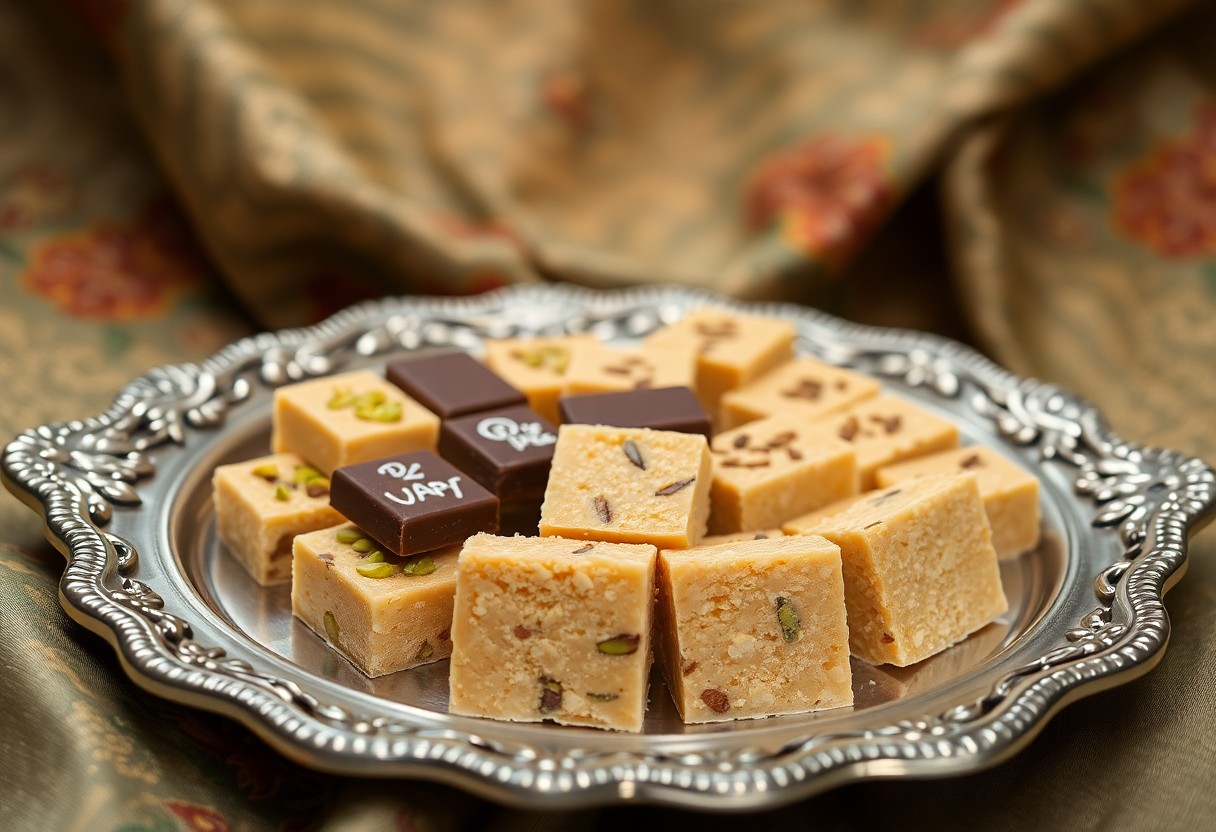
Barfi is a delightful Indian sweet that embodies the rich culinary heritage of the country. Made from condensed milk and sugar, it boasts a smooth, fudge-like texture that melts in your mouth. Often adorned with nuts and flavored with cardamom or saffron, barfi is a must-try for anyone seeking to explore traditional Indian sweets.
Milk-based Confection
Your introduction to barfi will likely reveal its milk-based roots, predominantly prepared from khoya or condensed milk. This ingredient lends barfi its creamy richness, making it a popular choice among connoisseurs of Indian sweets. The process involves meticulous cooking and stirring to achieve the perfect consistency, resulting in a treat that is both decadent and satisfying.
Various Flavors Available
Barfi is not just a one-flavor delight; you can explore an array of flavors that cater to diverse palates. From the classic Kaju Barfi, made with cashews, to the vibrant Pista Barfi featuring pistachios, each variety offers a unique taste experience. Some are infused with fruit or other sweeteners, giving you the chance to find your personal favorite.
In terms of flavors, barfi truly shines with creativity. You may encounter unique variations like Coconut Barfi, which combines grated coconut for a tropical twist, or Chocolate Barfi, perfect for those who love a modern twist on tradition. Each flavor reflects the regional influences and seasonality, making your experience with barfi dynamic and ever-changing. Indulging in these diverse options ensures that every bite of barfi is a new adventure for your taste buds.
Ladoo
Ladoo is a beloved traditional Indian sweet known for its delightful taste and variety. Made from a mixture of flours, sugars, and ghee, these round treats come in numerous regional variations, each offering a unique flavor experience. From festivals to special occasions, ladoos are a cherished part of Indian culture that you should savor.
Round, sweet balls
These round, sweet balls are typically enjoyed during festivities and family gatherings. Their appealing shape and rich taste make them a favorite among both children and adults. Each bite delivers a sweet, melt-in-your-mouth sensation that is hard to resist.
Often made with flour
Ladoos are often made with various types of flour, forming the base of this delicious sweet. Common choices include gram flour (besan), wheat flour, or semolina (sooji), each adding its own distinctive texture and flavor.
The use of flour in ladoo preparations allows for a wide range of flavors and combinations. For instance, besan ladoos are rich and nutty, while suji ladoos can be light and fluffy. These flour-based variations are frequently complemented by ingredients like desi ghee, nuts, and dried fruits, making each ladoo a unique treat that embodies the essence of Indian sweets. You’ll find that these ladoos not only satisfy your sweet tooth but also reflect regional culinary traditions.
Rasgulla
One of the most beloved sweets in India, Rasgulla offers a delightful experience with its unique texture and flavor. Originating from West Bengal, these soft, white cheese balls soaked in sugary syrup are a must-try. Whether enjoyed at festivals or as a simple dessert, Rasgulla provides a sweet escape with every bite, allowing you to indulge in a true taste of Indian culture.
Spongy, syrupy cheese balls
Rasgullas are made from chhena, a fresh cheese derived from boiling milk and curdling it with an acidic agent. These cheese balls are then simmered in a light sugar syrup, resulting in their spongy texture and sweet flavor. Each Rasgulla absorbs just the right amount of syrup, ensuring a delightful balance that makes them irresistible to your taste buds.
Bengali sweet delight
This exquisite dessert is not only a staple in Bengali households but also a source of pride for the culture. Rasgulla’s origin stories are deeply intertwined with the rich culinary traditions of West Bengal, reflecting its historical significance. With its playful texture and sweet, refreshing taste, you find Rasgulla elevating special occasions and everyday meals alike, symbolizing joy and celebration in every bite.
Peda
Peda is a beloved Indian sweet made primarily from milk, sugar, and a hint of flavor. Originating from the regions of Maharashtra and Uttar Pradesh, it has become a favorite during festivals and celebrations. With its soft texture and rich taste, it makes for a delightful treat that you must indulge in at least once. Whether enjoyed as a dessert or given as a gift, Pedas offer a taste of traditional Indian sweetness that you will cherish.
Soft Milk Fudge
The base of Peda is often a soft milk fudge known as khoya or mawa, made by simmering full-fat milk until it thickens. This process results in a creamy and rich confection that melts in your mouth. As you savor the textures, you’ll appreciate the artisanal touch that goes into crafting such a delicacy. Soft milk fudge is truly the heart of Peda, providing a canvas for various flavors and enhancements.
Often Flavored with Cardamom
Cardamom is a common spice used in Peda, elevating its flavor profile to new heights. This aromatic spice adds a warm and complex taste that complements the sweetness of the milk fudge. The infusion of cardamom transforms each bite into a fragrant experience, making it an imperative element in traditional recipes. As you explore Peda, you’ll find that the hint of cardamom not only enhances its flavor but also connects you to the rich culinary heritage of India.
Mysore Pak
Mysore Pak is a delectable Indian sweet that offers a melt-in-your-mouth experience. Made primarily from gram flour, ghee, and sugar, this treat is celebrated for its rich flavor and unique texture. You’ll find it in various kitchens across India, especially during festivals and special occasions, showcasing the essence of Indian culinary artistry.
Rich, buttery, gram flour sweet
This traditional sweet is renowned for its rich, buttery flavor, combining the nutty taste of gram flour with generous amounts of ghee. When you take a bite, you’ll experience a delightful blend of sweetness and a soft, crumbly texture that makes Mysore Pak unforgettable. It’s a true indulgence for those who appreciate the finer aspects of Indian sweets.
Originating from Mysore
Mysore Pak traces its roots back to the royal kitchens of Mysore, Karnataka. It was first prepared for the 13th Duke of Mysore, Maharaja Krishnaraja Wodeyar IV, and has since become a symbol of royal heritage. Your taste of Mysore Pak connects you to this rich history, offering a glimpse into the traditional methods that have been preserved through generations.
The origins of Mysore Pak are steeped in history, dating back to the early 20th century when it was originally crafted as a special dessert for royal feasts. The intricate process of preparation exemplifies the skill of Indian chefs, who carefully balance the ingredients to achieve the perfect consistency. Over the years, the sweet has evolved but remains true to its roots, delighting both locals and tourists alike. Enjoying Mysore Pak not only satisfies your sweet cravings but also allows you to appreciate a rich cultural heritage in every bite.
Sooji Halwa
As a beloved classic in Indian households, Sooji Halwa is a delightful dessert made from fine semolina, ghee, sugar, and aromatic spices. Often served during festive occasions and celebrations, its melt-in-the-mouth texture and rich flavor make it a must-try for anyone seeking to experience traditional Indian sweets.
Semolina-based dessert
Sooji Halwa, a semolina-based dessert, offers a comforting balance of sweetness and nuttiness. The semolina is roasted in ghee, creating a fragrant base that enhances the flavors when combined with sugar and water or milk. This simple yet satisfying recipe showcases the versatility of semolina in Indian cuisine.
Warm, often garnished
Typically served warm, Sooji Halwa is often embellished with an array of garnishes. Chopped nuts like almonds, cashews, or pistachios are frequently sprinkled on top, providing a delightful crunch and visual appeal. You might also encounter sweet variations with the addition of saffron or cardamom, which elevate the overall experience.
Serving Sooji Halwa warm not only enhances its comforting qualities but also allows the flavors to meld beautifully. The garnishing of nuts not only adds a layer of texture but also contributes to the richness and flavor profile, making each spoonful a luxurious treat. You’ll find that the inviting aroma and appealing presentation make it a favorite among guests and family alike.
Final Words
With this in mind, indulging in these top 10 traditional Indian sweets will enrich your culinary experiences and deepen your appreciation for Indian culture. Each sweet offers a unique flavor profile and represents regional diversity, ensuring there is something to delight every palate. As you explore these treats, you’ll not only satisfy your sweet tooth but also launch on a flavorful journey that connects you to the rich heritage and traditions of India. Don’t miss the chance to savor these delightful confections at least once in your life.