Tradition steers your palate as you navigate Canada’s top spots for Indian sweets, guiding you to authentic mithai, regional specialties, and trusted confectioners; this guide helps you identify shops known for quality ingredients, artisanal techniques, and consistent flavor so you can savor genuine, time-honored recipes across major cities.
The Rich Heritage of Indian Sweets
Rooted in texts like the 12th-century Manasollasa and centuries of temple prasadam, Indian sweets evolved through royal kitchens and regional households. You can trace Mughal-era refinements (16th-18th centuries) introducing rich milk-and-nut techniques, while southern and eastern traditions emphasized jaggery, coconut, and rice. Those historical layers explain why your tasting ranges from syrup-soaked rasgulla to dense, slow-cooked khoya barfi.
Historical Significance
Sweets served as offerings, wedding staples, and trade goods long before commercial confectioneries appeared. You’ll find records of temple kitchens producing bulk prasadam, and by the 19th century urban bazaars in Calcutta and Delhi sold ready-made mithai. Festivals still demand specific items – for example, laddoos for Ganesh Chaturthi and payasam for Onam – so your sampling connects directly to centuries of ritual and economy.
Regional Varieties
Regions favor distinct bases: Punjab and Uttar Pradesh rely on khoya for gulab jamun and barfi; Bengal and Odisha use chhena for rasgulla and sandesh; Maharashtra and Gujarat highlight besan and motichoor laddoo; South India leans on coconut, jaggery, and rice-based pithas, with Mysore pak from Karnataka as a celebrated gram-flour ghee sweet. You’ll encounter dozens of named specialties that reflect local ingredients and techniques.
Beyond names, you’ll notice texture and technique shift dramatically: chhena sweets are kneaded and shaped, khoya confections require long reduction and caramelization, while syrup-soaking versus frying creates distinct shelf lives (chhena-based sweets best within 1-2 days refrigerated; khoya items often last 3-5 days). Canadian shops adapt by using refrigeration, vacuum packing, or milk powder substitutes so your regional favorites travel well across the diaspora.
Top Cities for Indian Sweets in Canada
Across Canada, a handful of urban centres concentrate the best mithai: the Greater Toronto Area, Brampton and Mississauga in Ontario; Surrey and Vancouver in British Columbia; and pockets in Calgary and Edmonton. You can explore dozens of specialty shops, seasonal stalls and temple prasadam counters that serve everything from freshly fried jalebi to slow-cooked rabri. City festivals draw thousands, and neighbourhood clusters mean you’ll often find authentic sweets within a few blocks of South Asian grocery hubs.
Toronto’s Sweet Spots
In Toronto you’ll find the highest density of traditional mithai makers, especially along Gerrard India Bazaar and in Scarborough and North York. Heritage shops that have traded for decades sit beside modern fusion bakeries, so you can compare classic kaju katli and ladoo with mango-misu barfi or rose-pistachio kulfi. Many sellers offer festival boxes and wholesale trays for events, making Toronto a practical base when you want both authenticity and variety.
Vancouver’s Hidden Gems
Vancouver’s best sweets are concentrated in Surrey’s Newton and surrounding suburbs, where family-run confectioners produce fresh peda, warm gulab jamun and regional delicacies from Punjab and Gujarat. You’ll notice smaller shops inside multicultural strip malls and seasonal stalls at Vaisakhi and Diwali fairs, often serving sweets prepared the same day to local taste preferences.
Dig deeper in Vancouver and you’ll find artisans who’ve operated for 15-40 years, offering specialties like saffron-infused ras malai or besan ladoo made with ghee from local dairies. You can ask for hot jalebi on the spot or buy festival laddoo in bulk; many shops post customer favorites and ingredients, so your choices range from traditional temple-style sweets to contemporary house-made confections tailored to diaspora palates.
Must-Try Indian Sweets
Traditional Sweets
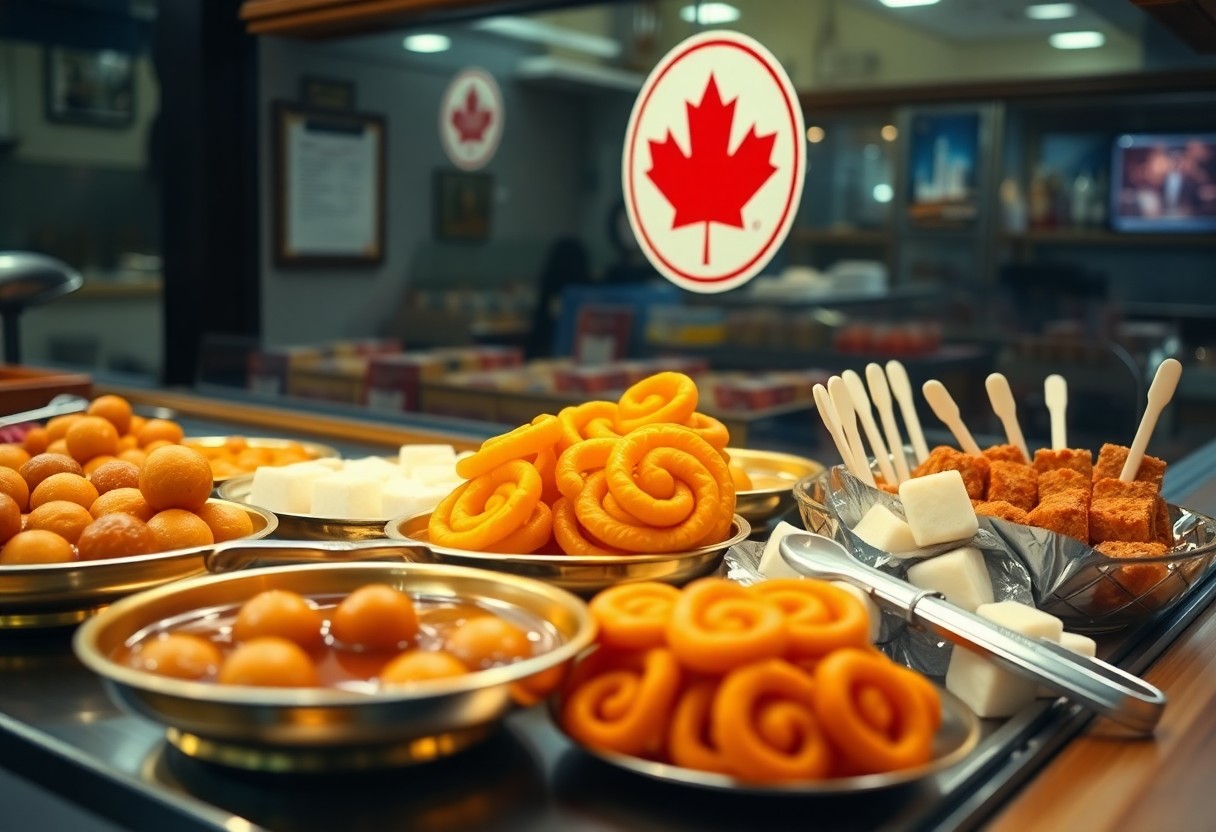
Start with classics that define Indian mithai: gulab jamun, rasgulla, kaju barfi and laddoo. You’ll find khoya-based gulab jamun soaked in rose-cardamom syrup, Kolkata-style rasgulla with its spongy chhena texture, and cashew-rich barfi often sold by weight (250g, 500g, 1kg). Many Canadian mithai shops in Toronto, Brampton and Vancouver still use family recipes dating 30-50 years, so you can taste regional authenticity in every box.
Modern Twists on Classics
Fusion bakers in Canada are reimagining sweets: jalebi served as crisp spirals atop vanilla gelato, cardamom panna cotta inspired by rabri, and chai-spiced macarons that pair with filter coffee. You can sample mango kulfi cheesecake or rose-lassi sorbet at pop-ups and cafés across Toronto and Vancouver, where innovative pastry chefs blend Indian spices with Western techniques to create approachable desserts for new audiences.
Often chefs replace ghee with brown butter or fold mascarpone into rabri to balance sweetness, giving classics a cleaner finish; you’ll notice saffron and jaggery used alongside local berries or BC cherries in limited-edition runs. Street-food festivals and farmers’ markets are reliable spots to try these experiments, and many shops release 100-200-piece batches that sell out within days-so plan visits on launch weekends if you want the freshest samples.
Popular Indian Sweet Shops
Across cities like Toronto and Vancouver you’ll find dense pockets of Indian sweet shops offering 30-60 varieties-from gulab jamun and kaju katli to regional sandesh-typically priced between CA$12-$30 per kilogram. Family-run stores often carry recipes spanning 2-4 generations, while larger outlets keep year-round staples. You should time visits before festivals: many shops double production for Diwali and seasonal items frequently sell out within days.
Reviews and Recommendations
Check Google and Yelp for shops rated 4.5+ with 100+ reviews to gauge consistency; reviewers routinely note texture (springy rasgulla, dense kaju katli) and syrup sweetness. You should read recent comments for freshness, request a morning batch or a free sample, and compare three different sweets to test sugar levels and mouthfeel before committing to a kilo.
Artisan vs. Commercial Brands
Artisan producers make small-batch mithai using on-site khoya, hand-roasted nuts and seasonal spices, while commercial brands use milk powder, standardized syrups and food-grade preservatives to ensure longer shelf life. You’ll often pay 20-50% more for artisanal pieces but get fresher texture and variable sweetness; commercial sweets win on consistency, availability and suitability for shipping or gifting.
If you prioritize authentic texture and flavor, opt for artisan sweets-expect refrigerated shelf life around 3-7 days and bold notes of saffron, rose or cardamom; if you need durability choose commercial options with unopened shelf life of weeks to months and secure packaging. You can split purchases: buy small artisan assortments for tasting and commercial boxes for parties or long-distance gifts to balance freshness with convenience.
Cultural Significance of Indian Sweets
Across rituals and social life, sweets act as markers of prosperity and hospitality: you see them in temple prasadam, wedding platters and gift boxes. In Canada, many South Asian bakeries stock 20-30 varieties during festival periods, reflecting regional ties-Bengali rasgulla for Durga Puja, Gujarati mohabbat for weddings-so your choice signals community, occasion and even regional identity.
Celebrations and Festivities
During Diwali, Holi and Navratri you’ll find mithai distributed in bulk-wedding counters often display 10-15 varieties and sweet boxes sent to families typically contain 6-12 pieces. Vendors in Toronto and Brampton scale up production by 2-3x for festival weeks, while community halls order kilos of barfi and laddoo as part of ritual offerings and guest plates.
Everyday Treats
You’ll encounter sweets beyond ceremonies: street vendors sell jalebi and gulab jamun as quick treats, neighbourhood mithai shops offer daily fresh pedas and barfis, and many households keep 1-3 varieties for guests or tea-time. Portioning favors small servings-single pieces or 50-100 g boxes-to fit routine consumption.
In Canadian cities you’ll notice adaptations for everyday demand: sugar-free and fusion options, single-serve packaging priced from about $1-$3 per piece, and weekday batches timed for evening rush. This practical supply lets you enjoy traditional recipes like besan laddoo or milk pedha without buying large quantities, sustaining daily ties to heritage.
Buying and Enjoying Indian Sweets
You should inspect sweets for freshness and provenance: check production date, packaging seals, and ingredient lists for ghee or khoya. Dairy-based sweets like rasgulla or peda usually keep 2-3 days refrigerated, while dry confections such as kaju katli or soan papdi can last 7-14 days. Ask vendors for a small sample, note syrup clarity in jalebi and texture in barfi, and plan storage-airtight for dry sweets, chilled for milk-based-to preserve flavour and safety after purchase.
How to Choose the Best
Trust your senses: fragrance of cardamom or rose indicates fresh spices, firm but yielding texture signals proper preparation, and clear syrup shows correct syruping. Verify labels for production date and allergen info; many reputable shops in Canada mark shelf-life. For fried items, ask about frying oil turnover. When possible, request a 1-2 piece sample-consumers in markets like Toronto report better picks after tasting rather than relying on appearance alone.
Pairing Sweets with Beverages
Match intensity and temperature: pair warm masala chai with syrupy gulab jamun or jalebi to cut sweetness, choose chilled salted lassi for rich kheer or rabri, and serve filter coffee alongside dense barfi. For adults, a slightly sweet Moscato or late-harvest Riesling brightens milk-based sweets; sparkling water or unsweetened green tea acts as a neutral palate cleanser between bites.
Balance plays the biggest role: acidic or carbonated drinks tame cloying textures, tannin-light wines avoid bitterness with spice-laden mithai, and temperature contrast amplifies pleasure-warm chai with hot gulab jamun or cold lassi with chilled kulfi. Try alternating one sip per bite and experiment: for a six-piece platter, offer 200-250 ml of beverage per person so flavours remain distinct without overwhelming the sweets.
Summing up
The best Indian sweet shops in Canada invite you to explore regional recipes, fresh ingredients, and time-honored techniques; you can compare flavors from Punjab to Bengal, seek shops with in-house preparation, and prioritize quality over price. Use reviews and word-of-mouth to find authentic mithai, sample seasonal specialties, and support family-run bakeries to deepen your appreciation for this vibrant culinary tradition.