Most of your choices should hinge on ingredient transparency, shop reputation, and sensory cues; you should seek sweets made with pure ghee and full-fat milk solids, observe texture and aroma, ask about traditional preparation methods, favor small family-run shops known for recipes passed down generations, and check reviews and community recommendations to ensure you get genuinely authentic flavors in Brampton.
Understanding Authentic Indian Sweets
Authentic Indian sweets reveal themselves through ingredients, technique and regional markers. You can judge by texture-khoa-based burfi should be dense and slightly grainy, chhena-based rasgulla light and spongy, and gulab jamun evenly browned and fully syrup-soaked. Shops that reduce milk by hand for 2-4 hours or make chhena fresh rather than using powdered substitutes will deliver a noticeably truer flavor and mouthfeel.
Key Ingredients to Look For
You should expect genuine items to use fresh khoa/mawa or hand-separated chhena, genuine ghee instead of hydrogenated fats (vanaspati), premium saffron (kesar), green cardamom, whole nuts like pistachios and almonds, and jaggery for regional specialties. Also check for rose water or kewra in traditional recipes and avoid preservatives, artificial colors, or excessive starches that dilute authentic texture and taste.
Traditional Preparation Methods
Many authentic sweets depend on time-intensive techniques: slow-reducing milk to make khoa (often 2-4 hours), hand-kneading chhena for a few minutes to achieve the right elasticity, frying gulab jamun at moderate heat for even color, and cooking sugar syrup to one-string consistency for proper soakage. You’ll notice these steps produce distinct textures that industrial shortcuts cannot mimic.
For more detail, regional methods matter: Bengali makers whip and knead chhena then poach balls in light syrup for 6-8 minutes to get sponginess, while Gujarati or Rajasthani halwas may roast ingredients 15-20 minutes over low heat to develop nutty notes. You can often tell authentic shops in Brampton by their equipment-heavy-bottomed copper or steel degs, hand tools, and visible slow-cooking vats-because consistent temperature control and manual handling prevent rubbery or grainy outcomes.
Tips for Identifying Quality Sweets
When you inspect sweets, focus on texture, ingredients, and provenance: check ghee aroma, visible nuts, and absence of excess syrup; weigh presentation against price – premium mithai often uses saffron, pistachios, and has neat hand-cut edges.
- Ask the vendor for production/packing date
- Request a small sample before buying a kilo
- Compare price per kg with two nearby shops
Knowing the best rasgulla is springy within 48 hours while barfi stays good for about 5-7 days helps you decide.
Visual Appearance and Presentation
You should inspect color uniformity, clean cuts, and garnishing: natural saffron threads, hand-sliced pistachios, and a matte ghee sheen indicate care, while neon hues or uneven sugar bloom suggest artificial coloring or poor storage. Check for syrup pooling – excess liquid means over-soaked sweets – and prefer neatly portioned pieces for consistent freshness and hygiene.
Aroma and Freshness Indicators
You can detect freshness by scent: authentic sweets give a warm milky or ghee aroma with cardamom or rose notes, whereas sour, alcoholic, or musty odors signal spoilage; if the fragrance is overwhelmingly floral or chemical, it may be synthetic. Sniff close to the container and trust your nose when aroma feels off.
You should note intensity and nuance: real cardamom smells green and slightly citrusy, saffron offers a subtle honeyed scent, and fresh ghee is buttery not rancid. Overly uniform, cloying floral scents often come from synthetic additives, so when aroma lacks layers or masks the milk note entirely, ask when the batch was made and check the expiry or refrigeration history before buying.
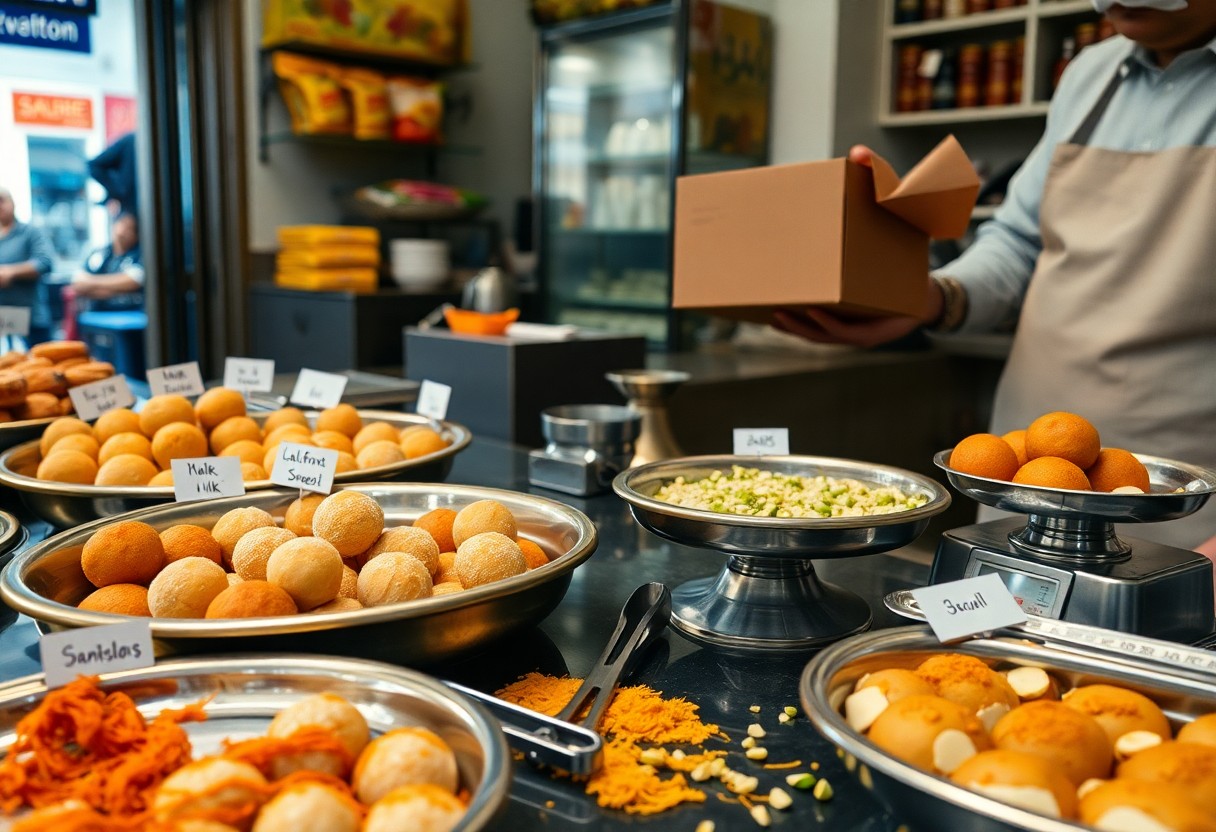
Factors to Consider When Buying
When buying sweets you should check production date, ingredient list and whether items are made on-site; milk-based sweets like rasgulla or peda generally keep 3-7 days refrigerated, while dry sweets such as besan ladoo or soan papdi last 2-8 weeks. After use the checklist below to compare shops quickly.
- Production date & packaging – ask for same-day or 24-48 hour production for milk sweets.
- Shelf life & storage – refrigeration needs and expected per‑kg shelf life (3-7 days milk‑based, 2-8 weeks dry).
- Ingredient quality – clarify ghee vs vegetable oil, paneer freshness, and presence of artificial colors.
- Hygiene & certifications – look for posted public health scores or supplier HACCP/CFIA practices.
- Taste samples & consistency – request a small tasting; consistent batches over 6-12 months indicate reliability.
Reputable Stores and Suppliers
Choose vendors with transparent sourcing and 10+ years in local service or those supplying caterers and temples, since they routinely produce 20-50 kg batches for festivals; you should prefer shops that display public‑health inspection ratings or mention pasteurized milk and fresh ghee on labels, and aim for suppliers who allow sample tasting and provide clear storage instructions.
Customer Reviews and Recommendations
Check Google, Yelp and local Facebook groups for shops with 50+ reviews and an average rating above 4.0; you should scan recent reviews for comments about freshness, portion sizes and sweetness level, and treat photos of purchased boxes as strong evidence of presentation and packing quality.
When interpreting reviews, weight recent feedback (last 3 months) and look for repeated praise or complaints-if multiple reviewers mention the same batch‑to‑batch variation, ask the shop about their production schedule; you can also solicit direct recommendations from community centres or gurdwaras that place regular bulk orders to verify consistency before buying by the kilo.
Popular Indian Sweets to Try in Brampton
You’ll find a wide mix of gulab jamun, rasgulla, jalebi, kaju katli, besan ladoo, barfi and kulfi across Brampton’s sweet shops; try at least five varieties to compare textures and sweetness levels. Seek chhena-based treats for Bengali styles, khoya-rich barfi for North Indian richness, and fried-syrup items like jalebi for crispy-syrupy contrast. Sampling across multiple shops in a single neighborhood quickly reveals which makers favor cardamom, saffron, or pure ghee.
Classic Choices
You should start with classics: gulab jamun (soft, syrup-soaked milk dumplings), rasgulla (spongy chhena balls in light syrup), jalebi (fermented batter fried then soaked), kaju katli (dense, cashew-based diamonds) and besan ladoo (toasted gram-flour balls). Focus on texture-silky gulab jamuns and melt-in-your-mouth kaju katli indicate quality-and ask vendors if sweets are freshly made that day to avoid stale sugar crystallization.
Regional Specialties
You’ll spot regional specialties reflecting Punjab, Gujarat, Bengal and South India: sandesh and rosogolla for Bengali chhena work, gajar ka halwa and rabri from Punjabi kitchens, mysore pak and adhirasam from the South, plus Gujarati shrikhand and Maharashtrian modak during festivals. Pay attention to whether a shop uses chhena or khoya, since that determines authenticity for many regional recipes.
When you dig deeper, inspect specifics: authentic Bengali rosogolla is springy with light syrup, whereas Punjabi rasgulla can be denser and sweeter; mysore pak should be porous and buttery from ghee, not oily. Ask vendors about batch timing-shops that make chhena-based sweets daily tend to offer brighter flavors-and sample small quantities to compare syrup concentration, spice levels (cardamom, saffron) and finishing techniques like silver vark or pistachio garnish.
Exploring Local Indian Sweet Shops
When you wander Brampton’s sweet districts, you’ll see counters stacked with over 30 varieties of mithai-pedas, barfi, jalebi, rosogolla and regional specialties like mysore pak. Many shops near Bramalea City Centre and along Main Street offer sample plates of 4-6 pieces so you can compare texture and syrup balance. Pay attention to refrigeration, uniform shapes and visible production dates to assess freshness and quality.
Best Places to Purchase
Seek out long-established shops with 10-25 years of operation and steady local reviews, often clustered around downtown corridors and mall fronts; these vendors typically accept pre-orders for trays of 24-100 pieces. Ask for ingredient lists-ghee vs. hydrogenated fats-and watch bakers hand-roll ladoos or temper sugar for jalebi to gauge craftsmanship. Peak hours are usually 4-7 PM, and weekend demand spikes during festival seasons.
Unique Offerings in Brampton
You’ll find fusion creations and regional rarities side-by-side: saffron-maple kaju katli, gulab jamun cheesecake, and Bengali-style sandesh appear at specialty shops, while 3-5 vendors focus on imported Bengali and Punjabi sweets. Seasonal items like mango rasgulla in summer and specialty pedas around festival months set certain stores apart, so check weekly menus or social feeds for rotating offerings.
During Diwali and Eid, many shops increase output 2-3× and require you to pre-order 7-10 days ahead for large trays; for example, popular bakeries often limit festival pre-orders to 100 pieces per customer to manage demand. Street-side vendors may sell a dozen hot jalebis for roughly $6-10, whereas artisanal mithai commonly ranges $18-30 per pound-these figures help you decide between convenience and handcrafted quality.
Maintaining Authenticity After Purchase
Storage Tips
When you store sweets, match method to type: refrigerate milk-based items like rasgulla and gulab jamun at 1-4°C for 2-3 days, keep ghee-based mithai such as kaju barfi or besan ladoo in airtight containers for 7-10 days, and freeze vacuum-sealed barfi for up to 3 months. You should separate syrup from fried sweets to prevent sogginess and avoid strong-odour foods near your containers to preserve flavor.
- Label containers with purchase date and type.
- Use parchment between layers to stop sticking and condensation.
- Perceiving off-odors, slimy texture, or cloudy syrup indicates you should discard the item immediately.
Serving Suggestions
Warm syrupy sweets slightly before serving: heat gulab jamun for 20-30 seconds in the microwave or simmer syrup on low for 2 minutes; re-crisp jalebi in a 180°C (350°F) oven for 3-5 minutes and serve within 24 hours, while barfi and pedas are best at 8-12°C to let aromas open. You should portion 1-2 pieces per guest for tastings.
Consider pairing sweet choices with strong masala chai (one cup per two sweets) to cut richness, or fresh fruits like orange segments to refresh the palate; for events offer 3-5 varieties and plan 3-5 pieces per person, increasing to 5-7 at weddings. Garnish with slivered pistachios, saffron strands, or edible silver (varq) for an authentic presentation.
Final Words
To wrap up, when choosing authentic Indian sweets in Brampton you should prioritize shops with traditional recipes, visible preparation, clear ingredient lists, and positive local reviews; ask about provenance of dairy and sweeteners, sample items when possible, and prefer stores that balance freshness with proper packaging so your selections reflect genuine flavors rather than mass-produced imitations.