Over generations, you can discover Brampton’s vibrant assortment of classic Indian sweets, from syrupy gulab jamun and nutty barfi to cardamom-scented laddus; this guide equips you with where to find authentic preparations, what ingredients define regional varieties, and how to assess quality so your visits yield the best traditional flavors in the city.
Overview of Indian Sweets
You encounter a spectrum of textures and ingredients: milk/khoya confections like peda and barfi, chhena-based treats such as rasgulla and sandesh, nut-focused kaju katli and pista rolls, plus flour- and grain-based halwas and jalebi. Regional techniques produce syrupy, crumbly, fudgy or spongy results, and many sweets rely on just 3-6 primary ingredients-milk, sugar, ghee, nuts, flour and flavorings like saffron or cardamom-to deliver distinct tastes and shelf lives you’ll immediately recognize.
Historical Significance
You see Mughal influence in nut-and-milk amalgams introduced between the 16th-18th centuries, while chhena-based sweets trace modern refinement to 19th-century Bengal-Nobin Chandra Das’s 1868 rasgulla being a landmark. Royal kitchens and temple offerings shaped recipes, and migration spread techniques: as artisans moved, their sweets adapted to local milk types, sweeteners and festive calendars, so many classics you enjoy today evolved over centuries rather than appearing overnight.
Regional Variations
You’ll notice clear regional signatures: East India favors fresh chhena (rasgulla, sandesh), North relies on reduced-milk khoya (gulab jamun, peda), West emphasizes nuts (kaju katli, dhokla-like sweets), and the South showcases coconut, jaggery and Mysore pak. Ingredients, texture and sweetness levels shift by state, and local festivals often determine which variety becomes prominent in shops and homes.
You can observe practical differences when you shop: eastern chhena is hand-pressed for a softer, spongy mouthfeel, while northern khoya sweets are slow-reduced for dense richness. During Diwali in Brampton many shops stock 8-12 varieties, highlighting region-specific techniques-syrup at a one-string stage (≈110°C) for spongy gulab jamun versus firmer sugar crystallization for kaju katli-so your choice reflects both origin and method.
Laddu: The Beloved Classic
Types of Laddu
You’ll find five popular laddu types across Brampton sweet shops: besan, motichoor, boondi, rava, and coconut, each showing distinct textures and festival associations; besan is dense and nutty, motichoor is fine and syrupy, boondi slightly coarse, rava semi-soft, and coconut fresh and light. Assume that your occasion dictates choice-motichoor for weddings, besan for Diwali, coconut for summer events.
- Besan (gram flour) – nutty, roasted texture
- Motichoor – tiny, syrup-bound pearls
- Boondi – larger fried beads, firmer
- Rava (semolina) – soft, grainy, quick to make
- Coconut – moist, perishable, party favorite
| Besan | Roasted gram flour, dense, often with chopped nuts |
| Motichoor | Fine boondi, soaked in one-thread sugar syrup, melt-in-mouth |
| Boondi | Larger droplets, firmer bite, used for offerings |
| Rava | Semolina base, softer, quick home preparation |
| Coconut | Fresh coconut or desiccated, moist, shorter shelf life |
Popular Ingredients
You often see ghee, sugar or jaggery, besan, semolina, fresh coconut, cardamom, and chopped nuts across Brampton sweet shops; a home besan-laddu recipe uses roughly 2 cups besan, 1 cup ghee, and 3/4 cup sugar as a starting point, while motichoor relies on fine boondi and one-thread sugar syrup for binding.
When you inspect shop batches, notice that ghee quality and roasting time (15-20 minutes for besan until golden and fragrant) change flavor dramatically; many makers add 5-10% crushed nuts by weight for crunch and 3-4 crushed green cardamom pods per batch for aroma, with jaggery used seasonally for richer color and deeper taste.
Barfi: A Creamy Delight
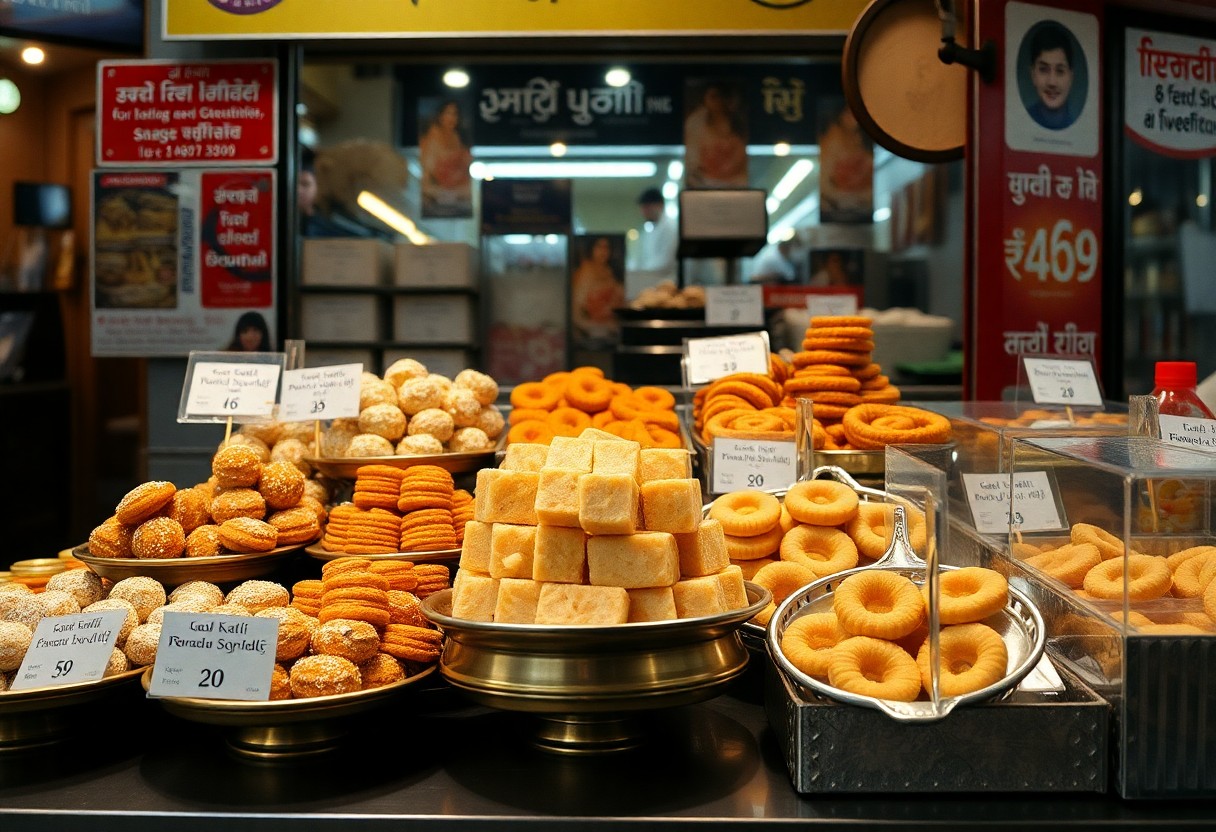
Prepared by slowly reducing milk into khoya and sweetening it, barfi gives you a dense, melt-in-your-mouth texture that contrasts with syrupy Indian sweets. In Brampton shops you’ll find it cut into diamond shapes, often garnished with edible silver (varak) or nuts, and sold by weight-typical portions vary from 200 g tasting boxes to 1 lb gift packs.
Varieties of Barfi
You can choose from classic varieties like kaju (cashew), pista, coconut, besan, and khoa/milk barfi, plus chocolate and almond versions. Larger Brampton mithai stores commonly stock 8-12 distinct barfi types, ranging from fudgy to slightly grainy; you should try small pieces of three different textures to find your preference.
Unique Flavors
Shop bakers experiment with flavors such as kesar-cardamom, rose-pistachio, mango during late summer, and more adventurous options like espresso or chili-chocolate barfi. Seasonal mango barfi typically appears for 4-6 weeks, giving you a chance to taste a limited-run specialty that blends traditional technique with modern tastes.
When you sample these, note that saffron and rose versions use small amounts of premium ingredients, which raises prices; expect artisan specialty barfi at Brampton shops to range roughly $12-$20 per pound. Store leftovers refrigerated for 7-10 days, and pair stronger flavors-espresso or chili-with milder milk barfi to balance richness.
Other Notable Indian Sweets
Gulab Jamun
You’ll find gulab jamun made from khoya (evaporated milk solids) or milk powder, shaped into 3-4 cm balls, deep-fried and soaked in warm sugar syrup flavored with cardamom and rose water; vendors in Brampton often serve them warm, typically 2-4 per order, and you can spot variations like pistachio-stuffed or rabri-topped versions at specialty sweet shops.
Jalebi
You encounter jalebi as bright-orange spirals made from fermented gram or wheat batter, piped into hot oil and soaked in saffron-scented syrup; many Brampton sweet shops ferment batter 6-12 hours for tang and sell jalebi by the piece or as festival platters during Diwali and weddings.
If you want crisp jalebi, batter fermented 6-12 hours gives a pleasant tang; frying at about 180-190°C (350-375°F) creates the lace-like texture, and briefly soaking in 60-70°C syrup balances crunch and sweetness. You’ll enjoy peak texture within 10-15 minutes, and shops often serve jalebi with chilled rabri or a cup of masala chai.
Availability of Indian Sweets in Brampton
You’ll find dozens of options across Brampton, from family-run mithai shops to South Asian grocery counters, concentrated near Bramalea City Centre, Bovaird Drive plazas, and downtown storefronts; popular choices include laddus, barfi, jalebi, gulab jamun and rasgulla, and you can often buy by piece, per pound, or as custom celebration boxes for festivals and parties.
Local Sweet Shops
You can visit longstanding, family-run shops-many operating 10-25 years-that roast fresh besan for laddus, prepare layered barfi and syrupy jalebi daily; expect in-store sampling, regional specialties (Punjabi, Gujarati, Bengali), and weekday hours often starting by 8 AM, with weekend rushes around Diwali and wedding season.
Online Ordering Options
You can order through DoorDash, Uber Eats and SkipTheDishes for same-day delivery from several Brampton sweet shops, or contact shops via their websites, Instagram or WhatsApp for pickups and custom orders; delivery fees typically range from a few dollars up to $10 depending on distance and order size.
For larger events you should place orders 48-72 hours ahead: many shops accept card, e‑transfer or cash on delivery, offer set catering packages for 20-200 guests, and provide photos, ingredient lists and sugar adjustments on request so you can confirm quality and portioning before pickup or delivery.
Cultural Significance of Indian Sweets
You see sweets functioning as social glue: laddus and barfi mark rites of passage, temples distribute prasadam, and Brampton bakeries supply assortments for weddings and festivals. Wedding mithai trays commonly contain 8-10 varieties-besan, motichoor, kaju barfi-signaling prosperity and hospitality. Vendors report festival-season demand often doubling, which shows how mithai embody goodwill, status and intergenerational bonding in both ritual and everyday life.
Festivals and Celebrations
During Diwali, Holi, Raksha Bandhan and Vaisakhi you routinely gift and share mithai; typical Diwali boxes weigh 1-2 kg and include 6-12 varieties. Temples and gurdwaras distribute prasad, while community events in Brampton feature jalebi and gulab jamun stalls. Demand spikes in the two weeks before major festivals, prompting special assortments like peda and soan papdi from local halwais.
Family Traditions
In your household, recipes often travel through names-grandmother’s besan laddu or an aunt’s condensed-milk barfi become signature items. You might still use the same 2-cup measure, stirring ghee and sugar until aroma cues doneness; these tactile cues preserve technique. A single spoonful at a ceremony connects you to ancestors and sustains culinary lineage across generations.
Families in Brampton commonly organize batch-making sessions where 4-10 relatives assemble to produce hundreds of pieces for weddings or memorials; techniques like slow-roasting gram flour or tempering sugar syrup are taught by demonstration. You’ll notice small adaptations-reduced sugar, added cardamom-to suit local tastes, yet core methods and ceremonial roles remain, keeping identity alive through shared preparation and consumption.
To wrap up
From above, you can see how Brampton’s sweet shops offer a rich spectrum of classics from laddu to barfi, each reflecting regional techniques and fresh ingredients; your visits will let you compare textures, sweetness levels, and presentation so you can confidently select favorites for celebrations or daily indulgence.