Many Canadian cities now host authentic Indian mithai shops where you can sample traditional ladoos, barfis, peda, rasgulla and gulab jamun crafted by experienced confectioners; this guide directs you to top bakeries from Vancouver to Halifax, explains regional variations, highlights ingredient quality and offers tasting tips so you can confidently choose the best sweets for your celebrations or your everyday indulgence.
The Rich History of Indian Sweets
Tracing back to temple offerings and Mughal court kitchens, Indian sweets have evolved over centuries into hundreds of regional specialties. You can spot Persian sugarwork influences in shahi tukda and royal pedas, while village traditions kept jaggery- and legume-based confections alive. Historical cookbooks and merchant records show sweets as markers of trade, status and seasonality, shaping the mithai you now discover in Canadian shops.
Traditional Ingredients
Ghee, khoya (mawa), chhena (fresh cheese), jaggery and besan (gram flour) form the backbone of many recipes you encounter; spices like cardamom and saffron add aroma, while pistachios and rose water provide finishing notes. You’ll also find regional staples-coconut in the south, cocoa variations in modern adaptations-and simple preservation methods such as sugar syrups and slow reduction to concentrate milk solids.
Cultural Significance
Sweetmeats anchor festivals, life-cycle rituals and hospitality: Diwali, Holi, Eid and weddings all feature specific mithai. You often give boxed sweets as gifts, use them as prasad at temples, and display them at ceremonies. Regional stars-rasgulla in Bengal, Mysore pak in Karnataka, laddu varieties across states-signal local identity, so the sweets you select communicate heritage as much as taste.
In Canada, sweets play both social and economic roles: you’ll see shops in Brampton, Toronto and Surrey scale production for Diwali and weddings, with orders often in the hundreds. Entrepreneurs adapt recipes-lowered sugar, plant-based khoya-to suit local preferences, and curated gift boxes have become a common way you can share regional specialties across the diaspora.
Popular Indian Sweets in Canada
You’ll find traditional mithai sprinkled across Canadian cities-Toronto, Brampton, Mississauga and Vancouver host numerous mithai shops and grocery aisles stocked year-round. Besan, motichoor and kaju specialties dominate festival sales, while bakery versions appear in fusion bakeries and chains like T&T. For Diwali and weddings you’ll often buy sweets by weight or in gift boxes; retailers report peak demand during October-November and around major community events.
Ladoos
You’ll recognize ladoos by their round shape and dense texture; besan (roasted gram flour), motichoor (tiny boondi pearls), coconut and rava variants are common. Many Canadian sweet shops use ghee for richness and cardamom for aroma, and you’ll see ladoos offered in 250-500 g boxes for gifting. Home bakers often prefer besan for shelf stability, while motichoor is favored at large celebrations for its delicate, melt-in-mouth quality.
Barfis
You’ll encounter barfi in multiple styles-kaju (cashew), pista (pistachio), plain milk (khoya or condensed milk base) and flavored versions like chocolate or rose. Shops finish pieces with edible silver vark and pistachio slivers; premium kaju barfi is priced higher per kilogram due to nut cost. Barfi’s firm, sliceable texture makes it ideal for boxed assortments and catering platters at Indian weddings across Canada.
For storage and sourcing, you can refrigerate barfi for about 7-10 days or freeze it up to three months without major quality loss; thaw in the fridge to avoid condensation. Artisanal sweet shops in Brampton and Surrey often hand-roll kaju barfi and use whole cashews for a creamier mouthfeel, while mass-produced versions rely on cashew powder and condensed milk-your choice affects texture, price, and how long the sweet keeps.
Regional Variations of Indian Sweets
Across India, regional techniques and ingredients shift the sweet landscape, and you’ll notice those differences in Canadian shops from Toronto’s Gerrard Street to Vancouver’s Punjabi Market. North favors milk solids, ghee and sugar syrups for celebrations like Diwali and weddings, while South leans on coconut, jaggery and rice for Onam and Pongal. You can often trace a dessert’s origin by texture-grainy versus syrupy-and by where it appears on festival menus or temple prasads in your city.
North Indian Sweets
You’ll find classics such as gulab jamun (khoya fried balls soaked in sugar syrup), jalebi (fermented maida batter fried then soaked), kaju katli (cashew fudge) and besan ladoo dominating North Indian menus. Shops in Punjabi and Delhi communities in Canada stock ras malai and barfi for Diwali boxes and weddings; many recipes rely on reduced milk (khoya), copious ghee and cardamom, delivering rich, dense textures that you expect from northern celebrations.
South Indian Sweets
You’ll encounter Mysore pak (gram flour, ghee, sugar from Karnataka), payasam variants (palada, parippu, ada pradhaman) and unniyappam across South Indian communities; these use jaggery, coconut milk and rice or lentil bases, frequently served at Onam and Pongal. In Canada, temple fundraisers and South Indian bakeries in Scarborough, Brampton and Surrey regularly offer fresh batches, showcasing the region’s preference for coconut and palm-sugar flavors.
When you examine deeper, technique defines South sweets: Mysore pak’s porous, melt-in-mouth crumb comes from controlled ghee reduction with gram flour, while ada pradhaman relies on slow-simmered coconut milk and jaggery to develop caramelized notes. You’ll also notice unniyappam’s crisp exterior and soft, banana-sweet interior created by fermenting rice batter briefly, and that many South recipes are tied to temple prasadam traditions, influencing how and when you can find them locally.
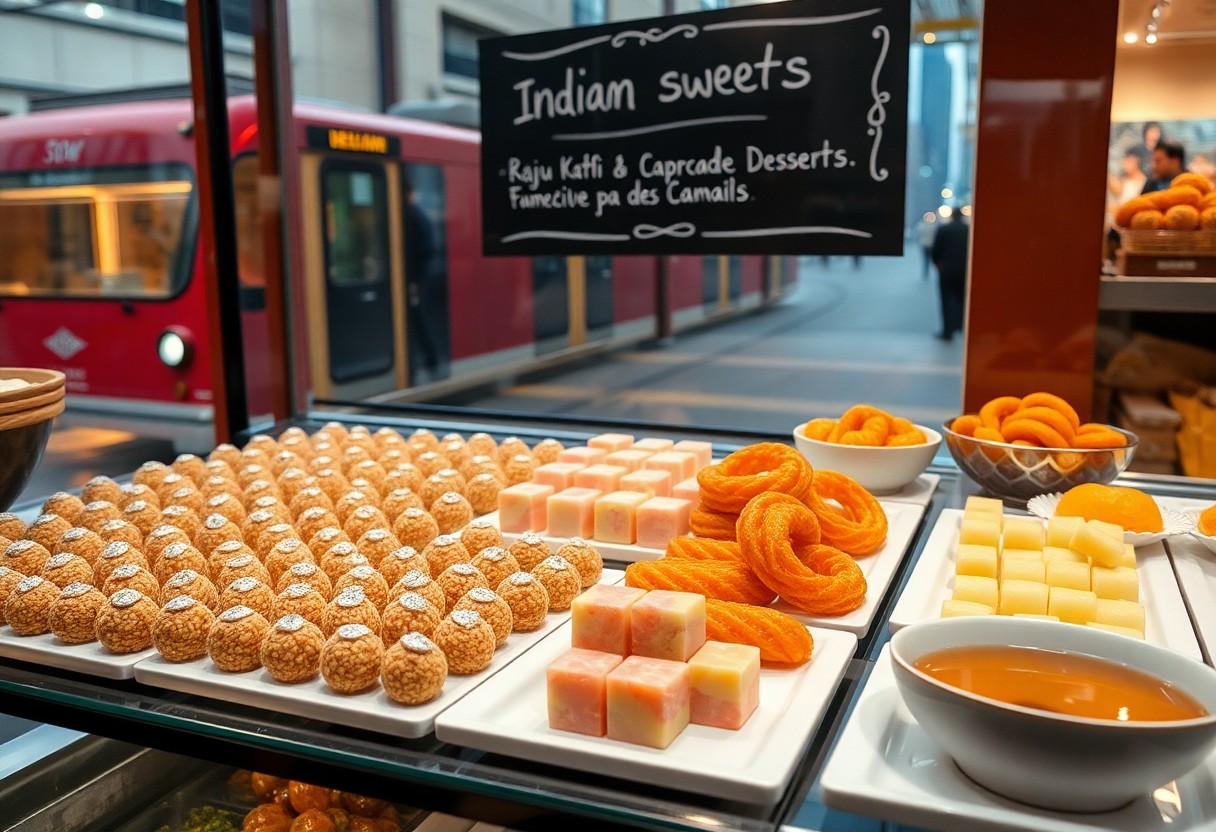
Where to Find Indian Sweets in Canada
Across major Canadian hubs-Toronto, Brampton, Mississauga, Vancouver and Calgary-you’ll find dozens of dedicated mithai shops, South Asian grocery aisles and seasonal stalls at community markets offering both imported and locally made sweets; many stores expand inventory around Diwali and wedding season, and you can often order fresh laddoos or boxed barfis for same-week pickup or 2-5 day delivery depending on the vendor.
Local Indian Sweet Shops
In neighbourhoods like Brampton’s Main Street, Toronto’s Gerrard East and Vancouver’s Punjabi Market, you can buy from family-run mithai shops and bakery-style sweet houses that sell items by weight (often CAD 12-25 per pound) and make specialty orders-ask for freshly rolled besan ladoo, hot jalebi, or custom mithai platters for 10-100 guests to get authentic texture and flavour.
Online Retailers
If you prefer ordering online, marketplace options and specialty Indian grocers ship nationwide, offering 50-200 SKUs that include dry mithai, shelf-stable sweets and refrigerated items with chilled shipping; you’ll see delivery windows of 2-7 days, payment by card or Interac, and user reviews that help you confirm quality before you buy.
When shopping online, check product pages for ingredient lists, shelf life and shipping method-perishable mithai often adds CAD 10-25 for refrigerated courier service; verify certifications (Halal or FSSAI numbers for imported goods) and read return policies and customer photos, and consider subscription boxes or bulk orders when you need consistent delivery for events or gifting.
Making Indian Sweets at Home
When you try homemade mithai, pick recipes with 3-4 ingredients and clear timings: besan ladoo (2 cups gram flour, 1 cup ghee, 3/4 cup sugar, makes ~12), kaju katli (250 g cashews, 1/2 cup sugar, sets in 20-30 minutes), or rasgulla (2 L milk yielding ~20-24 chenna balls, simmer syrup 8-10 minutes). You’ll control sugar levels, textures and make batch sizes that suit your family.
Essential Recipes
Focus on three staples to build skills: besan ladoo (roast 2 cups besan in 1 cup ghee for 12-15 minutes until nutty), gulab jamun (250 g khoya, fry at 160-170°C, sugar syrup 1.5:1 simmer 8-10 min), and rasgulla (paneer made from 2 L milk, knead to smooth, boil in light syrup). Mastering these gives you techniques transferable to barfi, peda and modak.
Tips for Beginners
Practice heat control and mise en place: use a heavy‑bottomed pan, weigh ingredients with a digital scale, and stir continuously when reducing milk or roasting flour. Use low to medium flame to avoid burning-roasting besan takes 12-15 minutes, reducing 2 L milk to chenna needs 25-30 minutes. Fresh full‑fat milk and clean utensils improve consistency.
- Use a digital scale for repeatable results.
- Prep all ingredients before you start; sweets progress quickly once syrup or ghee is hot.
- Adjust sugar by 10-20% to suit preference and regional styles.
- Knowing how to test sugar syrup (one‑thread) and oil temperature (160-170°C) prevents common failures.
If you want faster success, rely on ready-made khoya or canned condensed milk for first attempts-khoya-based gulab jamun takes ~20 minutes to prepare, condensed‑milk barfi sets in 20-30 minutes. Store sweets: barfi keeps 4-5 days refrigerated; syrup‑soaked mithai like rasgulla last 3-4 days. You’ll improve with 3-5 practice batches per recipe and by documenting ingredient tweaks.
- Cool sweets completely before cutting to get clean edges.
- Use stainless steel or nonstick heavy pans to prevent sticking and scorching.
- Label jars with date; most milk‑based mithai last 3-5 days under refrigeration.
- Knowing that barfi sets in 20-30 minutes in the fridge or that rasgulla benefits from 4-6 hours soaking will improve results.
Pairing Indian Sweets with Beverages
Pairing the right drink can lift a mithai experience: hot masala chai from Assam steeped 3-4 minutes complements syrupy jalebi and gulab jamun, while chilled rose lassi or sweetened milk balances creamy ras malai served cold. You’ll find filter coffee cutting through nutty mysore pak, and Darjeeling or green tea offering a lighter match for delicate peda. In Canadian festivals and mithai shops you can see these combinations repeatedly chosen by vendors and customers alike.
Traditional Pairings
Masala chai remains the go-to: its cardamom and ginger notes counterbalance syrup-heavy jalebi and gulab jamun, and Assam blends steeped 3-4 minutes are typical. You can pair chilled lassi with ras malai or rabri to temper sweetness, while filter coffee pairs well with dense treats like mysore pak and kaju katli. Street vendors in Toronto and Brampton routinely serve these classic duos, proving their lasting appeal across diasporic communities.
Modern Twists
Contemporary pairings push boundaries: you can match rasgulla or sandesh with Niagara icewine for a bright contrast, or sip cold-brew coffee alongside chocolate burfi to amplify cocoa notes. Craft beers – a crisp lager or citrusy IPA – appear on Toronto tasting menus to cut syrupy textures, and bartenders now craft masala chai cocktails and cardamom-infused espresso martinis to bridge sweet and bitter profiles.
Some Toronto and Vancouver dessert bars serve curated flights – three mithai bites with three miniature drinks – letting you compare mousse-like ras malai with Riesling, jalebi with sparkling prosecco, and kaju katli with single-origin espresso. You should experiment with temperature contrasts (serve sweets at 5-8°C with warm drinks at 60-65°C) and texture balances: effervescent wines and citrus-forward beers refresh the palate after oily or dense confections.