Desserts have a unique way of connecting cultures and stories, and in Canada, Indian sweets like Gulab Jamun and Rasgulla are gaining popularity. As you explore the delightful offerings in Canadian bakeries, you’ll discover how these traditional treats have adapted and flourished, blending rich cultural heritage with local tastes. Join us on this journey through the history, ingredients, and significance of these beloved desserts that are now enchanting your taste buds and leaving a sweet mark on Canada’s culinary landscape.
The Rich Cultural Heritage of Indian Desserts
Indian desserts are not just about flavor; they embody a rich tapestry of traditions, celebrations, and regional variations. Each sweet has a story to tell, often connected to festivals, marriages, and family gatherings that highlight the importance of togetherness in Indian culture. With ingredients like milk, sugar, and spices, these desserts transcend mere sustenance and elevate experiences into moments of joy and nostalgia. Your palate is about to journey through the diverse and vibrant layers of Indian sweetness.
Historical Roots of Gulab Jamun
Gulab Jamun traces its origins back to medieval India, with roots in Persian and Mughal culinary traditions. Initially influenced by the Persian dessert, “Luqa Maza,” which was made of milk solids, it evolved into the round, syrup-soaked delicacy you enjoy today. By the Mughal era, this sweet was perfected in India, often served at royal feasts and special occasions. Its name translates to “rose berry,” referencing its aromatic rose water essence, which you can savor in each bite.
The Legend and Significance of Rasgulla
Rasgulla, a round, spongy ball made from chhena, is a beloved dessert in India, particularly in Bengal. According to legend, it was created by the famous Bengali sweet maker Nobin Chandra Das in the 19th century, as a way to reinvent traditional sweets. This dessert symbolizes prosperity and a sense of community, often enjoyed during festivals such as Durga Puja and Diwali. Its light texture and subtle sweetness offer a delightful contrast to heavier Indian dishes, making it a preferred choice for celebrations.
The significance of Rasgulla goes beyond its taste; it represents the creativity and resourcefulness of Bengali cuisine. Legend has it that it was first created to appease the deities in temples, showcasing its deep cultural ties. The soft, syrupy texture of Rasgulla mirrors the warmth of Indian hospitality, making it a staple for gatherings. Today, you can find Rasgulla in various forms across Canada, allowing you to experience a piece of Bengali heritage right at your fingertips, fostering a connection between cultures and generations.
The Evolution of Indian Sweets in Canadian Bakeries
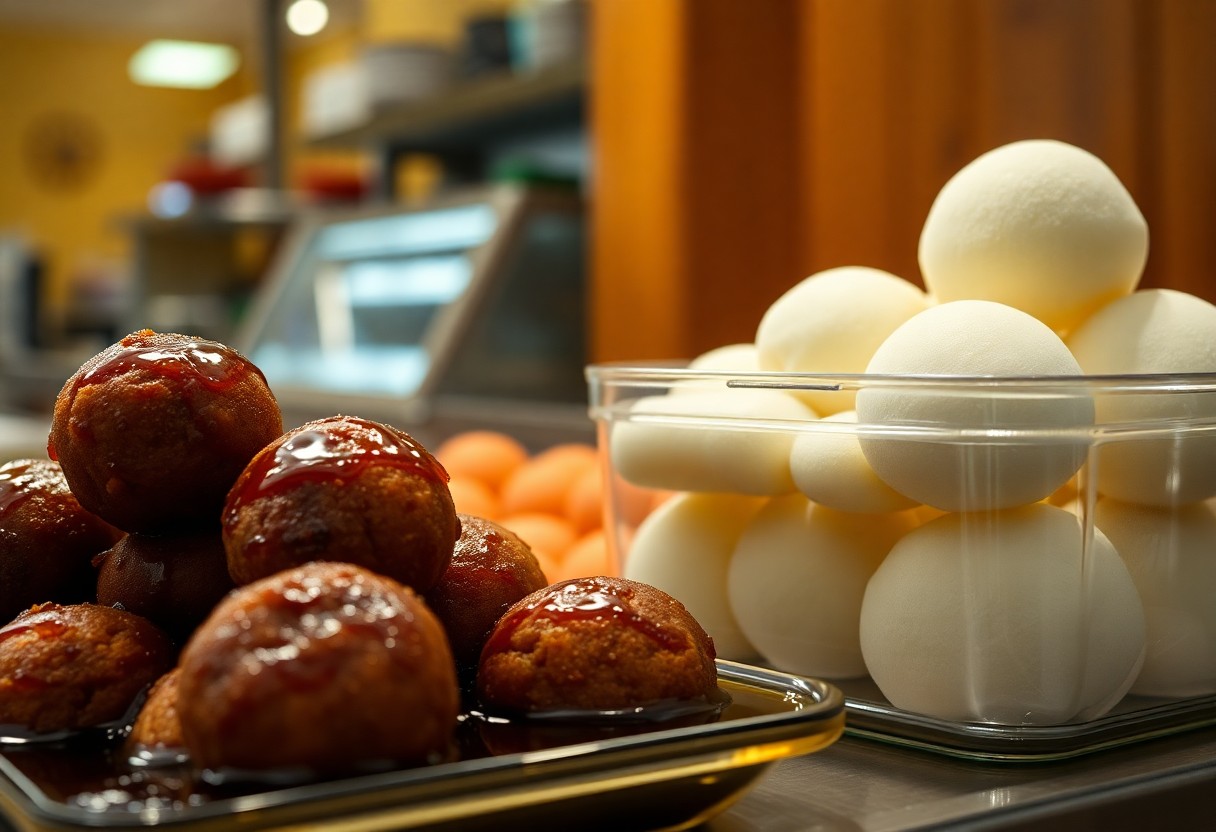
Indian sweets have transformed significantly within Canadian bakeries, growing from niche items to beloved staples. The increasing multicultural landscape and the fusion of culinary elements has allowed iconic desserts like Gulab Jamun and Rasgulla to gain a prominent place in sweet shops across the country. As Canadians seek diverse flavors, these traditional desserts evolve in response, blending innovation with heritage, showcasing the artisan abilities of bakers in both mainstream and specialized shops.
The Migration of Culinary Traditions
Migrating chefs have played an integral role in introducing Indian desserts to Canada. As families settled into their new homes, they brought along culinary traditions, which eventually influenced local bakery offerings. These shifts reflect not just personal stories, but also broader societal changes, as Canadian tastes embrace the richness of Indian flavors. The fusion of ingredients and techniques celebrates both the origins and the newfound local contexts of these cherished sweets.
Innovative Twists on Classic Recipes
With creativity at the heart of Canadian baking, you’ll find delightful reinterpretations of traditional Indian sweets. Bakeries often experiment by incorporating local ingredients or reimagining textures, resulting in unique flavors that cater to diverse palates. For instance, the classic Gulab Jamun may be served as a cake or even as a donut, marrying Indian traditions with contemporary dessert trends.
Local bakers aren’t afraid to mix cultures on the plate, turning classic recipes into something novel and exciting. For example, consider the creation of Rasgulla cheesecake, which layers the soft and spongy cheese balls with creamy cheesecake filling. Another exciting twist is the use of flavored syrups infused with Canadian maple in traditional Gulab Jamun, linking the essence of Indian sweets with beloved Canadian ingredients. These innovative spins not only retain the essence of their roots but also add a fresh perspective, making Indian desserts accessible and appealing to a wider audience.
Satisfying Canadian Palates: A Flavor Profile
Canadian bakeries have embraced Indian desserts like Gulab Jamun and Rasgulla, tailoring them to resonate with local taste preferences. You’ve likely noticed how these sweets are subtly infused with familiar flavors, ensuring they appeal to a diverse clientele. The balance of sweetness, richness, and the delicate nuances of spices create an engaging flavor profile that captivates even those who may not have grown up with these treats. As a result, these desserts have successfully transcended cultural boundaries while maintaining their traditional essence.
Sweetness and Texture: What Makes Them Irresistible
The irresistible charm of Gulab Jamun and Rasgulla lies in their perfect balance of sweetness and texture. Gulab Jamun’s outer layer is soft and slightly chewy, encasing a warm, syrup-soaked center, while Rasgulla offers a pillowy, spongy consistency that absorbs the syrup beautifully. This combination of flavors and mouthfeel creates a unique eating experience that leaves your taste buds craving more, inviting you to indulge time and time again.
Fusion Flavors: Blending Tradition with Modern Trends
Fusion flavors in Indian desserts have taken Canadian bakeries by storm, incorporating local ingredients and culinary techniques. Chefs are experimenting with flavors like salted caramel, matcha, and even seasonal fruits, marrying traditional Indian recipes with modern preferences. This exciting blend allows you to experience classic treats in a whole new light, celebrating their rich heritage while appealing to contemporary taste buds.
For instance, consider how a salted caramel Gulab Jamun marries the rich, syrupy sweetness of the original dessert with a modern twist of savory flavor. Additionally, Rasgulla infused with lavender or seasonal berries showcases how local tastes inspire innovation. Many Canadian bakeries are also opting for healthier variations, incorporating whole grains and alternative sweeteners, ensuring that you can savor these traditional desserts without compromising on your dietary preferences. This fusion not only enhances the overall dessert experience but also invites new audiences to discover the rich cultural narratives behind these beloved sweets.
Behind the Counter: The Artisans of Indian Desserts in Canada
Crafting Indian desserts in Canada is an art form that requires passion, patience, and skill. The artisans behind these delectable treats come from diverse backgrounds, often combining traditional techniques with innovative approaches. Their dedication to quality ingredients and authenticity ensures that each batch of Gulab Jamun or Rasgulla reflects the rich culinary heritage of India while appealing to the discerning tastes of Canadian dessert lovers.
Profiles of Notable Bakeries
Highlights of the Canadian dessert scene include iconic bakeries such as Sweet India and The Spice Route, each offering their unique twist on classic Indian sweets. Sweet India is renowned for its traditional Gulab Jamun, while The Spice Route integrates local flavors to create captivating fusion desserts. These establishments have not only perfected their recipes but also introduced you to an exciting array of Indian sweets, making them a must-visit for anyone looking to indulge.
The Craftsmanship of Dessert Making
Creating Indian desserts demands both precision and creativity. Artisans meticulously measure ingredients, ensuring the perfect balance of sweetness and texture in every batch. For instance, the preparation of Rasgulla involves kneading chhena (curdled milk) to achieve a soft, spongy structure. Following this, they are expertly boiled in sugar syrup, allowing them to absorb flavors and moisture. The end result is a delicate balance that delights your palate, showcasing the dedication of these skilled craftsmen.
The Community Connection: Celebrating Festivals with Sweets
Indian festivals in Canada blossom into vivid celebrations, where delicious sweets serve as the heart of the festivities. Whether it’s Diwali, Eid, or Holi, sharing dessert brings people together, reinforcing cultural ties and cherishing traditions. Gulab Jamun and Rasgulla, prominent in these gatherings, symbolize joy and hospitality, letting you indulge in the rich flavors while creating lasting memories with family and friends.
Importance of Dessert in Cultural Celebrations
Desserts play a vital role in cultural celebrations, acting as vessels for tradition and community bonding. During festivities, sweets like Gulab Jamun and Rasgulla signify prosperity and joy, vital elements of the celebrations. They not only tantalize the taste buds but also evoke nostalgia for many, connecting you to your heritage and enriching your festival experience.
Community Events Featuring Gulab Jamun and Rasgulla
Local events frequently showcase Gulab Jamun and Rasgulla, celebrating their cultural significance. Street fairs, food festivals, and community potlucks often feature these beloved desserts, allowing you to savor their delightful flavors while exchanging stories and laughter with others. From large-scale Diwali festivals in downtown Toronto to smaller Punjabi cultural fests, the presence of these sweets binds you to the community and its vibrant spirit.
For instance, the annual “Taste of India” festival in Vancouver, draws thousands of attendees and highlights the importance of sweets in Indian culture. Here, you can find food stalls showcasing Gulab Jamun and Rasgulla, where you can taste authentic recipes passed down through generations. The excitement fills the air as families gather around, relishing these treats and sharing stories of past celebrations. Similarly, community events during Diwali offer free servings of these popular desserts, ensuring that everyone experiences the joy of togetherness through the love of sweets.
Summing up
Ultimately, your exploration of Indian desserts, particularly Gulab Jamun and Rasgulla, in Canadian bakeries reveals a delightful fusion of cultures. As you savor these sweets, you engage with a rich history that transcends borders, showcasing the adaptability and appeal of traditional recipes. These desserts not only satisfy your palate but also offer a deeper connection to the diverse culinary landscape of Canada, where traditions are celebrated and reimagined. By enjoying these treats, you partake in a story of cultural exchange that enriches both your experience and understanding of food.