There’s a delightful world of Indian sweets waiting for you in Canada, offering a rich tapestry of flavors and textures that reflect the country’s diverse culinary heritage. From the indulgent laddoo to the crispy jalebi, this guide will help you navigate popular treats and where to find them, ensuring you can enjoy these authentic delights. Whether you’re celebrating a special occasion or simply craving something sweet, your journey through Indian desserts will be both enjoyable and satisfying.
Types of Indian Sweets
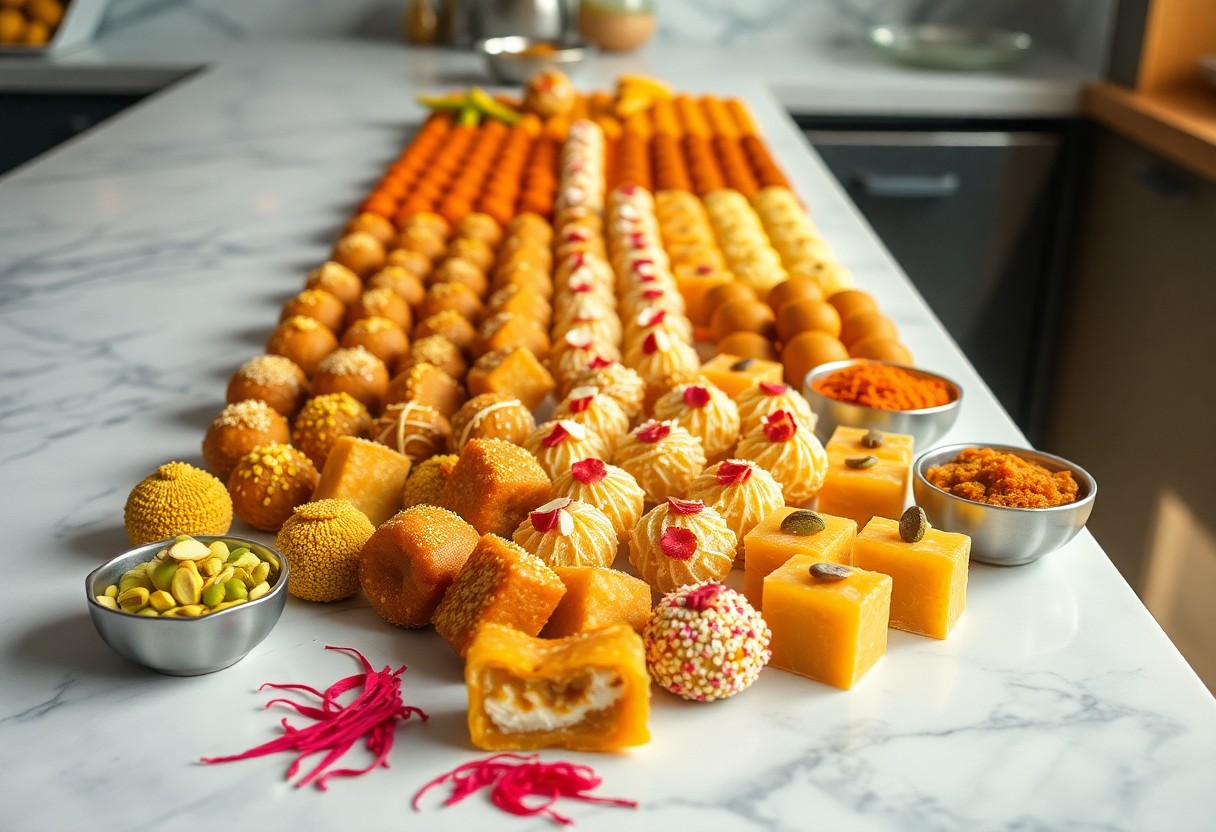
Indian sweets encompass a vast array of flavors, textures, and ingredients. They often reflect regional specialties, making them diverse and unique. Popular types include:
- Laddoo
- Jalebi
- Barfi
- Halwa
- Peda
Assume that your palate is ready to explore this sweet journey across Canada.
| Laddoo | Round, often made from chickpea flour, sugar, and ghee. |
| Jalebi | Crispy, spiraled deep-fried batter soaked in syrup. |
| Barfi | Dense and milk-based, available in various flavors. |
| Halwa | Rich, sweet pudding made from semolina, carrots, or lentils. |
| Peda | Soft, milk-based sweets often flavored with cardamom. |
Laddoo
Laddoo is a classic Indian sweet, typically round and made from various flours like chickpea or semolina mixed with sugar and ghee. They’re often rolled with nuts and dried fruits for added texture and flavor. You can find them in many varieties, including besan laddoo and rava laddoo, each having its distinct taste and texture.
Jalebi
Jalebi features a distinctive spiral shape and is made from fermented batter that is deep-fried and soaked in sugar syrup. The result is a crispy exterior with a sweet, sticky interior. Your taste buds will be delighted by the combination of flavors when you savor this vibrant orange or yellow treat.
Jalebi can be enjoyed warm or at room temperature, often paired with milk or yogurt. You may also come across variations like stuffed jalebi, where sweet fillings enhance the traditional taste. Look for this delicacy at Indian festivals or celebrations, as it brings a burst of sweetness to the occasion.
Barfi
Barfi is a popular milk-based sweet that comes in various flavors and textures, typically made using condensed milk, sugar, and flavorings like cardamom or fruit purees. You can find barfi topped with nuts, giving it a delightful crunch. Its dense and creamy consistency makes it a favorite among Indian sweets.
With flavors like pistachio, coconut, and chocolate, barfi is visually appealing, often garnished with silver or gold leaf. It’s a must-try dessert that showcases the richness of Indian sweets and is perfect for sharing during festivals or gatherings, making it a staple dessert in many households.
Halwa
Halwa is a rich, sweet pudding made from various base ingredients, such as semolina, carrots, or lentils, mixed with ghee, sugar, and spices. Its smooth texture and vibrant flavors make it a beloved dessert. In Canada, you can find variations like suji halwa or gajar halwa during festive celebrations.
This dessert can be customized with additions like nuts, raisins, or khoya to enhance its richness. Halwa’s warm, comforting presence makes it a nostalgic choice for many, reminding you of sweet family gatherings and cultural traditions. It often serves as a satisfying end to a meal or a delightful snack any time of the day.
Tips for Making Indian Sweets
To master the art of making Indian sweets, you need a blend of precision and creativity. Pay close attention to timings and temperatures, as these can affect the texture and flavor of your treats. Whether you are preparing a rich gulab jamun or a delicate pista burfi, using quality ingredients and practicing techniques is vital.
- Prep your workspace and ingredients before you start.
- Use fresh and high-quality dairy products.
- Be patient and allow sweets to cool adequately at each step.
- Experiment with flavors, but stay true to traditional ratios.
After mastering these tips, you’ll be on your way to creating mouth-watering confections.
Ingredients to Use
Your choice of ingredients significantly impacts the outcome of Indian sweets. Fresh dairy, such as paneer and milk, forms the base of many recipes. Depending on the sweet, you may need ghee, sugar, flour, and a variety of nuts and spices. High-quality saffron and cardamom elevate the flavors, so don’t skimp on these authentic ingredients.
Essential Tools
Equipping yourself with the right tools can streamline the process of making Indian sweets. You’ll need a sturdy heavy-bottomed pan for even heating, a thermometer to check sugar syrup consistency, and mixing bowls of various sizes. A ladle or wooden spoon and a round cutter for shaping the sweets also come in handy.
Investing in a few key tools can make a world of difference in your sweet-making journey. A heavy-bottomed pan prevents burning and ensures even cooking, while a thermometer helps achieve the perfect sugar syrup consistency, ranging from thread to soft-ball stages. Using a non-stick surface can also ease the process of shaping and help avoid sticky situations. With these tools in your arsenal, you’ll find that creating delightful Indian sweets is not only easier but also more enjoyable.
Step-by-Step Recipes
| Recipe | Description |
|---|---|
| Classic Laddoo Recipe | A simple, traditional sweet made with few ingredients that packs a rich flavor. |
| Homemade Jalebi Recipe | A crispy, spiraled delight soaked in syrup, perfect for satisfying your sweet cravings. |
Classic Laddoo Recipe
To make classic Laddoos, start by roasting besan (gram flour) in ghee until fragrant. Mix in crushed nuts and cardamom, then form small balls with the mixture while still warm. Let them cool, and enjoy this delightful treat that embodies the essence of Indian sweets.
Homemade Jalebi Recipe
Creating homemade Jalebi involves preparing a batter from all-purpose flour and yogurt, followed by letting it ferment. Once ready, pipe the batter into hot oil in a circular pattern, fry until crisp, and soak in warm sugar syrup to achieve that quintimportant sweetness.
Jalebi is not just a treat but a celebration of textures and flavors. The key to perfect Jalebi lies in the fermentation of the batter; ideally, allow it to sit for at least four hours. The batter’s tanginess enhances the flavor profile, while frying it at a consistent temperature ensures a crispy exterior that seamlessly absorbs the syrup. Finish with a sprinkle of saffron for an aromatic touch, elevating this beloved dessert.
Factors Influencing Sweetness
Sweetness in Indian sweets emerges from multiple factors that shape their unique flavors. From recipes and ingredient proportions to regional preferences, each element contributes to the overall taste. Climate and the freshness of ingredients also play critical roles in determining sweetness. The amount of sugar used can vary significantly, influencing the sweetness level and texture of the final product.
- Type of sugar used.
- Aspects of cooking techniques.
- Freshness of ingredients.
- Regional variations in recipes.
- Personal preferences of sweetness.
After observing these factors, you can tailor the sweetness of your Indian sweets to better suit your palate.
Sugar Types
Different types of sugar contribute distinct characteristics to Indian sweets. Commonly used sugars include white granulated sugar, jaggery, and brown sugar. Each type varies in flavor and texture, influencing the final product’s sweetness. For instance, jaggery imparts a unique richness, while brown sugar adds a deeper, caramel-like flavor. The choice of sugar can significantly enhance your sweet-making process.
- Granulated white sugar for classic recipes.
- Jaggery for traditional taste.
- Brown sugar for a caramel note.
- Honey as a natural sweetener alternative.
- Coconut sugar for a unique flavor profile.
Knowing these types allows you to experiment and create sweets that resonate with your taste preferences.
| Sugar Type | Flavor Profile |
|---|---|
| Granulated Sugar | Neutral, classic sweetness |
| Jaggery | Rich, earthy sweetness |
| Brown Sugar | Caramel-like sweetness |
| Honey | Slightly floral, natural sweetness |
| Coconut Sugar | Nutty, caramel notes |
Cooking Techniques
Cooking techniques significantly influence the sweetness and texture of your Indian sweets. The method you choose affects how the sugar interacts with other ingredients, ultimately determining the final product’s outcome. Common techniques such as simmering, roasting, and tempering can alter the sweetness level. For example, simmering allows for caramelization, enhancing natural flavors, while roasting can deepen the sweetness profile.
Utilize techniques like frying for making crispy treats like Jalebi, or slow-cooking for rich, dense sweets like Halwa. The duration and temperature also modify how sugar reacts, affecting crystallization and moisture content, which are vital for achieving desired textures. Mastering these cooking methods enables you to produce a variety of Indian sweets that reflect your preferred sweetness and texture.
Pros and Cons of Popular Indian Sweets
| Pros | Cons |
|---|---|
| Variety of flavors and textures | High sugar content |
| Use of natural ingredients | Can be time-consuming to prepare |
| Cultural significance in celebrations | May contain allergens (nuts, dairy) |
| Customizable recipes | Can lead to overeating |
| Tradition and heritage connected | Some varieties are expensive |
| Often handmade with care | May lack nutritional balance |
| Appealing presentation | Can be hard to find authentic versions |
| Satisfies sweet cravings effectively | Not suitable for certain diets |
| Often shared, fostering community | May contribute to health issues if overconsumed |
| Exploration of regional differences | Can be misleading due to variations in sweetness |
Nutritional Benefits
Your choice of Indian sweets often includes ingredients like lentils, nuts, and yogurt, which can offer nutritional benefits. For instance, sweets made from besan (gram flour) provide protein and fiber, while sweets with nuts supply healthy fats and vitamins. However, the focus on sugar should ensure you’re consuming these delicacies in moderation to maximize their positive effects.
Cultural Significance
Indian sweets play a vital role in festivals, weddings, and cultural ceremonies, symbolizing joy and community. You’ll find that each region infuses its unique flavors and traditions into sweet-making. For example, during Diwali, sweets symbolize the conquest of light over darkness, while at weddings, they represent prosperity and happiness.
Understanding cultural significance enhances your appreciation of Indian sweets. Each bite you take carries the essence of traditions, festivals, and familial bonds. Sharing sweets during auspicious occasions fosters togetherness and strengthens relationships. Consider learning the stories behind special sweets like Kaju Katli or Gulab Jamun; they connect you more deeply to the heritage and festivities surrounding them.
Finding Indian Sweets in Canada
To satisfy your sweet tooth for Indian desserts in Canada, various avenues are available, from local shops to online options, ensuring you have access to authentic flavors. Whether you seek a quick indulgence or planning for a festive celebration, you’ll find an array of choices to delight your palate.
Local Stores and Online Options
In urban centers, local Indian grocery stores and sweet shops offer a vibrant selection of sweets like gulab jamun and barfi. Many stores also maintain an online presence, allowing you to conveniently order your favorite treats from home. Websites such as Patel Brothers and Desi Junction not only stock traditional sweets but can also provide nationwide shipping, making your culinary experience accessible.
Community Events
Participating in community events is a wonderful way to explore and enjoy Indian sweets. Local festivals, cultural celebrations, and food fairs often feature stalls showcasing a variety of sweets, allowing you to sample different flavors and textures while engaging with the community.
During events like Diwali and Holi celebrations in Canada, you’ll encounter a rich tapestry of Indian sweets offered by various vendors. Festivals often include cooking demonstrations, giving you insight into the traditional methods of making these desserts. With gatherings attracting hundreds of attendees, you’ll not only savor delicious treats but also connect with fellow enthusiasts, celebrating shared cultural roots. Check local community calendars for upcoming festivals where you can immerse yourself in the delightful world of Indian confectionery.
Summing up
Upon reflecting, you now have a comprehensive understanding of the diverse Indian sweets available in Canada, from the rich, indulgent laddoos to the crispy, syrup-soaked jalebis. This guide equips you with the knowledge to explore these delectable treats, whether you’re enjoying them at a local restaurant or preparing them at home. Embrace the vibrant flavors and cultural significance of these sweets, enriching your culinary experience while connecting with India’s rich heritage. Go ahead and indulge your taste buds in this delightful journey!