Most Indian dessert lovers in Canada yearn for the rich, indulgent flavors of Gulab Jamun and Rasgulla. These classic sweets hold a special place in Indian cuisine, bringing joy to gatherings and celebrations. In this blog post, you will discover important tips and techniques to master the art of making these beloved desserts in your own kitchen, ensuring that each bite transports you back to the vibrant streets of India. Let’s look into the enchanting world of Gulab Jamun and Rasgulla and elevate your dessert-making skills!
The Sweet Science of Gulab Jamun
Crafting the perfect gulab jamun is more than just combining ingredients; it’s about understanding the sweet science that makes these syrup-soaked delights an integral part of Indian desserts. The precise ratios and techniques can significantly impact the texture and flavor, resulting in the pillowy softness you crave and a rich sweetness that’s just right. As you navigate through the process, you’ll discover how small alterations in your approach can lead to big differences in the final product, ensuring you create a batch that rivals those from your favorite Indian sweet shop.
Key Ingredients and Their Role in Flavor
The hallmark of gulab jamun lies in its simple yet vital ingredients: khoya (dried milk), all-purpose flour, and sugar syrup. Khoya brings richness and creaminess, while all-purpose flour acts as a binding agent, creating that signature melt-in-your-mouth texture. A hint of cardamom and a splash of rose water elevate the flavor profile, making each bite fragrant and enchanting. Using high-quality khoya truly enhances the overall experience, making your homemade gulab jamun extraordinary.
The Traditional Cooking Method vs. Modern Techniques
Traditional methods often involve rolling the dough by hand and deep-frying it in ghee, allowing for authentic flavors to develop. However, modern techniques may incorporate quicker frying methods, like using an air fryer or instant pot. While swift, these newer methods can alter the texture and flavor nuances that define authentic gulab jamun.
When you examine into traditional methods, the slower cooking process helps develop deep flavors and a perfect color. The slow frying in ghee creates a unique crust that allows the syrup to soak into the insides gradually, resulting in a soft, spongy dessert. Conversely, modern techniques may save time, but they often yield a denser texture, sacrificing that quintvital softness that makes gulab jamun irresistible. Experiment with both methods to find the balance that satisfies your palate while embracing culinary traditions.
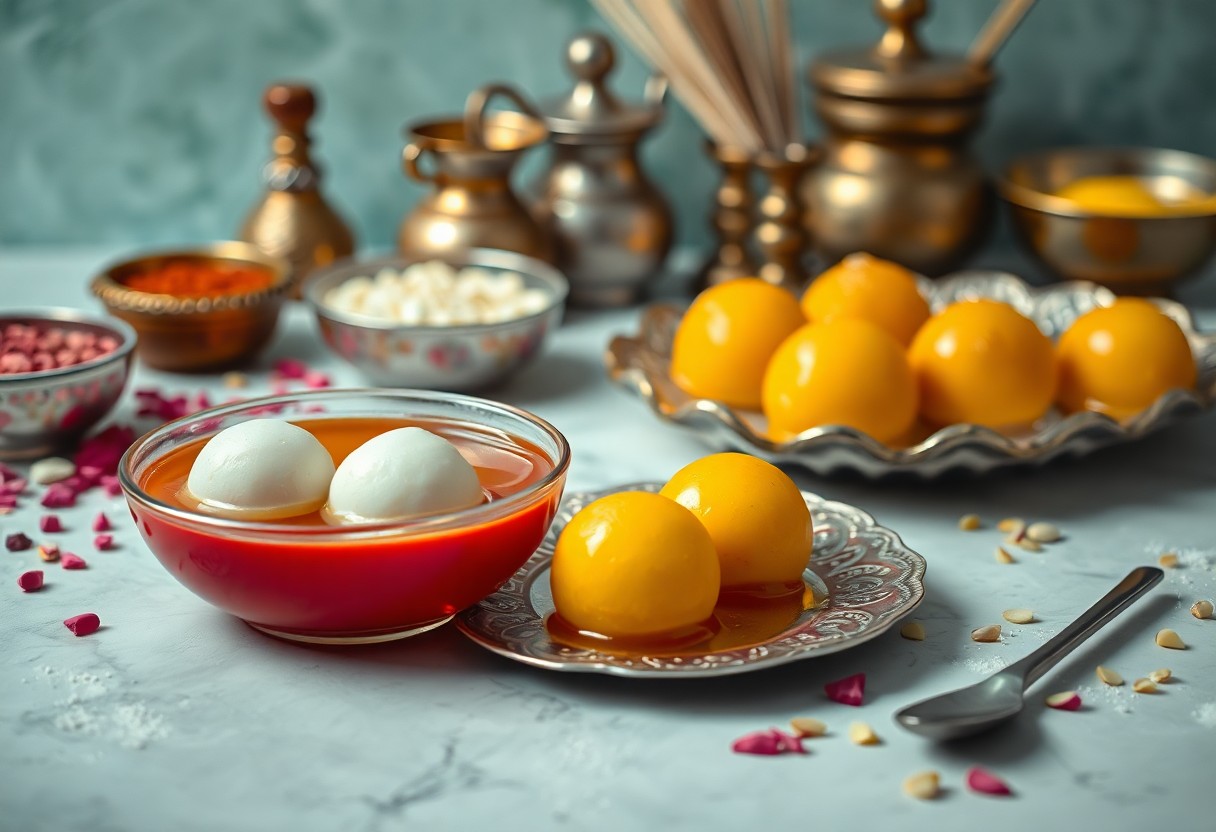
Mastering the Art of Rasgulla
Perfecting your technique in making rasgulla requires patience and practice, as the balance of flavors and textures is key to achieving the delicate, spongy delights that melt in your mouth. You’ll want to master the chhana preparation, as well as the shaping and cooking processes, so that each rasgulla is a flavorful experience that embodies the essence of Indian cuisine.
The Importance of Chhana: What Makes or Breaks Your Rasgulla
Chhana, the fresh cheese made from curdling milk, is the foundation of your rasgulla. Achieving the right consistency is vital—overcooked or undercooked chhana will lead to either a dense texture or a failure to hold its shape during cooking. Use fresh, whole milk to make your chhana, and remember to wash it thoroughly to eliminate any acidity before proceeding with your recipe.
Shaping and Cooking: Tips for Perfect Texture
Shaping rasgullas involves rolling the chhana into smooth, uniform balls to ensure they cook evenly. Keep your hands moist to avoid any sticking, and don’t apply too much pressure while shaping, as doing so can result in dense treats. When considering cooking, a gentle simmer in sugar syrup is crucial—high heat can lead to a tough outer layer. The ideal cooking time is around 15 to 20 minutes, allowing the rasgullas to expand and absorb the sweet syrup properly.
- Roll chhana balls lightly without applying much force.
- Simmer, don’t boil, the rasgullas in the syrup.
- Always maintain a steady flame to create the perfect texture.
- Thou shall ensure your syrup is adequately sweetened for optimal flavor.
Gaining mastery in shaping and cooking involves an understanding of both technique and timing. Allow each rasgulla to rest in the syrup after cooking, as this helps enhance their flavor. Explore variations in syrups, like adding cardamom or saffron for an aromatic twist. Pay attention to the size of your chhana balls—they should be small enough to expand comfortably in the syrup. Utilize these tips, as they will elevate your rasgulla to restaurant-level perfection.
- Try using a light touch when rolling for a fluffier bite.
- Monitor your syrup’s consistency; it should remain thin yet sweet.
- Gently slide the balls into syrup to avoid splashes.
- Thou shall experiment with flavors for unique variations in your dessert.
The Cultural Significance of These Desserts in India
Gulab jamun and rasgulla are not just delectable treats; they embody India’s rich culinary heritage and cultural narrative. These desserts often represent more than flavor; they are integral to social gatherings, familial ties, and cherished traditions, reflecting regional diversity. Each bite brims with nostalgia, evoking memories of childhood celebrations and home-cooked meals, binding people together in joyous moments that transcend generations.
Celebrations and Festivals: Key Moments for Gulab Jamun and Rasgulla
During major Indian festivals such as Diwali, Holi, and Eid, gulab jamun and rasgulla make their grand appearances, symbolizing joy and abundance. At family gatherings, these sweets are often presented as an expression of love and hospitality, reinforcing connections among relatives and friends. Their presence during these occasions adds a sweet touch to the festivities, turning each celebration into a delightful experience filled with warmth and togetherness.
The Role of Desserts in Indian Family Life
Desserts in Indian households are more than just a culinary delight; they act as a catalyst for fostering relationships and creating lasting memories. Sharing sweets like gulab jamun and rasgulla often marks significant milestones, whether it’s birthdays, weddings, or other accomplishments. These desserts are usually prepared as a family, with recipes passed down through generations, turning cooking into a bonding experience that connects younger and older family members. The act of enjoying these treats together reinforces cultural traditions, adding layers of meaning to every bite.
Adapting Recipes for Canadian Ingredients
Canadian kitchens often face unique ingredient challenges, but there are plenty of ways to adapt traditional Indian recipes like Gulab Jamun and Rasgulla to suit what’s available to you. Substituting certain ingredients can lead to delicious results that stay true to the essence of these beloved desserts. Explore local markets for alternatives or variants that can enhance your dishes while ensuring the flavors remain authentic.
Local Substitutions: Making the Most of What’s Available
Utilizing local products can elevate your Indian desserts. For instance, if you can’t find khoya, consider using ricotta cheese to replicate its creamy texture. Similarly, Canadian maple syrup can replace sugar in Gulab Jamun for a unique twist, while still complementing the rose and cardamom flavors. Embrace the bounty of your local grocery store to bring something new to the table.
Temperatures and Cooking Conditions: A Guide for the Canadian Kitchen
Your kitchen’s temperature and humidity can significantly affect the outcome of your desserts, especially when frying or simmering. Typically, a higher elevation and varying indoor climates in Canada may require slight adjustments in your cooking techniques. For frying Gulab Jamun, keep your oil at around 350°F (175°C) for optimal results. This adjusts for cooler ambient temperatures you may encounter during certain months.
Temperature and Cooking Conditions
| Cooking Aspect | Adjustment Tips |
|---|---|
| Frying Temperature | Maintain around 350°F (175°C) for perfect Gulab Jamun. |
| Simmering Phase | Adjust heat to ensure consistent warmth, using a thermometer if possible. |
| Humidity Factor | Consider incorporating a bit more moisture for dry indoor air. |
Understanding your cooking environment will allow you to make necessary adjustments. If you live in an area with a dry climate, incorporating an extra tablespoon of milk into your dough can help achieve the desired consistency. Conversely, in humid conditions, you might require less liquid. Always monitor your desserts while cooking to achieve perfect textures every time, adjusting as needed based on how your ingredients behave in your specific conditions.
Reference Table for Cooking Conditions
| Condition | Action |
|---|---|
| High Elevation | Increase cooking time by 10% to ensure thorough preparation. |
| Low Humidity | Add extra liquid or fat to provide moisture in doughs. |
| High Humidity | Decrease liquid slightly to prevent overly sticky mixtures. |
Common Pitfalls and Troubleshooting Tips
When making gulab jamun and rasgulla, common pitfalls can arise that may affect the texture and flavor of your desserts. To avoid disappointment, keep these issues in mind:
- Too much moisture in the dough.
- Incorrect sugar syrup consistency.
- Over-frying or under-frying the balls.
- Not allowing sufficient resting time for dough.
Knowing how to navigate these challenges will significantly elevate your dessert-making skills.
Avoiding Overcooking and Soggy Outcomes
Overcooking is a common issue when preparing gulab jamun and rasgulla. Keep a close watch on the frying process. The key is to ensure the oil isn’t too hot, which can lead to the outside cooking too quickly while leaving the insides raw. Aim for a medium heat, allowing the balls to cook evenly until they turn a deep golden color. For rasgulla, avoid boiling them for too long; they should be spongy yet firm, absorbing just the right amount of syrup without becoming soggy.
How to Rescue a Failing Batch
If you find your gulab jamun or rasgulla didn’t turn out as expected, there’s still hope for a delicious outcome. For gulab jamun, if your balls have turned dense or dry, try gently reheating them in warm sugar syrup with a splash of water to regain some moisture. In the case of rasgulla, if they are too hard, you can soak them in a flavorful syrup for a few hours to soften them up. Adding a few drops of rose water or cardamom can enhance the flavor too.
Rescuing a failing batch can be a bit of an art itself. For dry gulab jamun, heating them slowly in syrup allows them to absorb moisture, transforming them back into the soft delights they should be. When dealing with firm rasgullas, the trick lies in their time spent soaking; sometimes, leaving them overnight in syrup works wonders. They may regain their charming sponginess, so don’t lose hope; often the best desserts come after a little improvisation and patience!
To wrap up
With this in mind, you can easily master the art of making Gulab Jamun and Rasgulla right in your own kitchen in Canada. By gathering the right ingredients and following the tips provided, you’ll bring the authentic flavors of these beloved Indian desserts to life. Whether you’re impressing guests or satisfying your own sweet tooth, these recipes will not only enhance your culinary skills but also allow you to share a piece of Indian culture with your family and friends. Happy cooking!