Most perfect milk cakes rely on precise milk reduction and sugar balance; you can master these techniques by learning milk solids, patient simmering, and gentle stirring to produce authentic texture and flavor across traditional Indian sweets.
The Science of Milk Reduction
Understanding how gentle evaporation concentrates lactose and proteins lets you predict caramelization, color, and texture as you reduce milk; careful control of heat, surface area, and time produces the solids needed for perfect milk cake and related traditional sweets.
Thermal Processing and Moisture Evaporation
Heat applied steadily drives moisture off; you manage simmer intensity and pan width to balance evaporation speed with even cooking, avoiding scorch marks while concentrating milk solids for a creamy base.
Achieving the Characteristic Grainy Texture
Coagulation of casein and partial sugar crystallization form the grains you expect; you tweak stirring rhythm, acidity, and final drying to control granule size and retain moistness without collapsing structure.
Stirring technique affects grain uniformity: you begin with constant motion to prevent oversized curds, then ease off so small granules can coalesce; lowering heat late and scraping the pan concentrates solids, while a few drops of acid or measured agitation refines bite and mouthfeel for authentic milk cake texture.

Mastering the Alwar Milk Cake
Patience guides you through slow simmering and precise curd separation to achieve the correct texture and melt-in-mouth crumb in Alwar milk cake.
Precise Acidification for Controlled Curdling
Measure your acid in small increments so you induce gentle curdling, creating firm granules and clear whey while preserving sweetness balance.
The Art of the Caramelized Brown Core
Achieving the brown core requires slow, controlled milk reduction so you coax nutty sugars without burning and monitor color to reach the perfect bittersweet center.
Temperature control, constant stirring and a heavy-bottomed pan help you form even caramelization; scraping prevents hot spots and residual heat sets texture while preserving subtle milk florals.
Core Components of Indian Confectionery
Dairy components like khoya, ghee, and milk solids define texture and mouthfeel, so you should prioritize quality and freshness when making milk cake and other sweets.
The Superiority of High-Fat Dairy Solids
Ghee and concentrated milk solids provide deep flavor and a creamy crumb that you can only get from high-fat dairy, so adjust cooking times to prevent graininess.
Selecting Natural Sweeteners and Jaggery
Jaggery and unrefined sugars give caramel notes and moisture, so you should taste and balance when replacing refined sugar in traditional recipes.
You can select golden or dark jaggery depending on desired molasses intensity, dissolve it gently to avoid bitterness, and reduce overall liquid since unrefined sweeteners add moisture and deeper color.
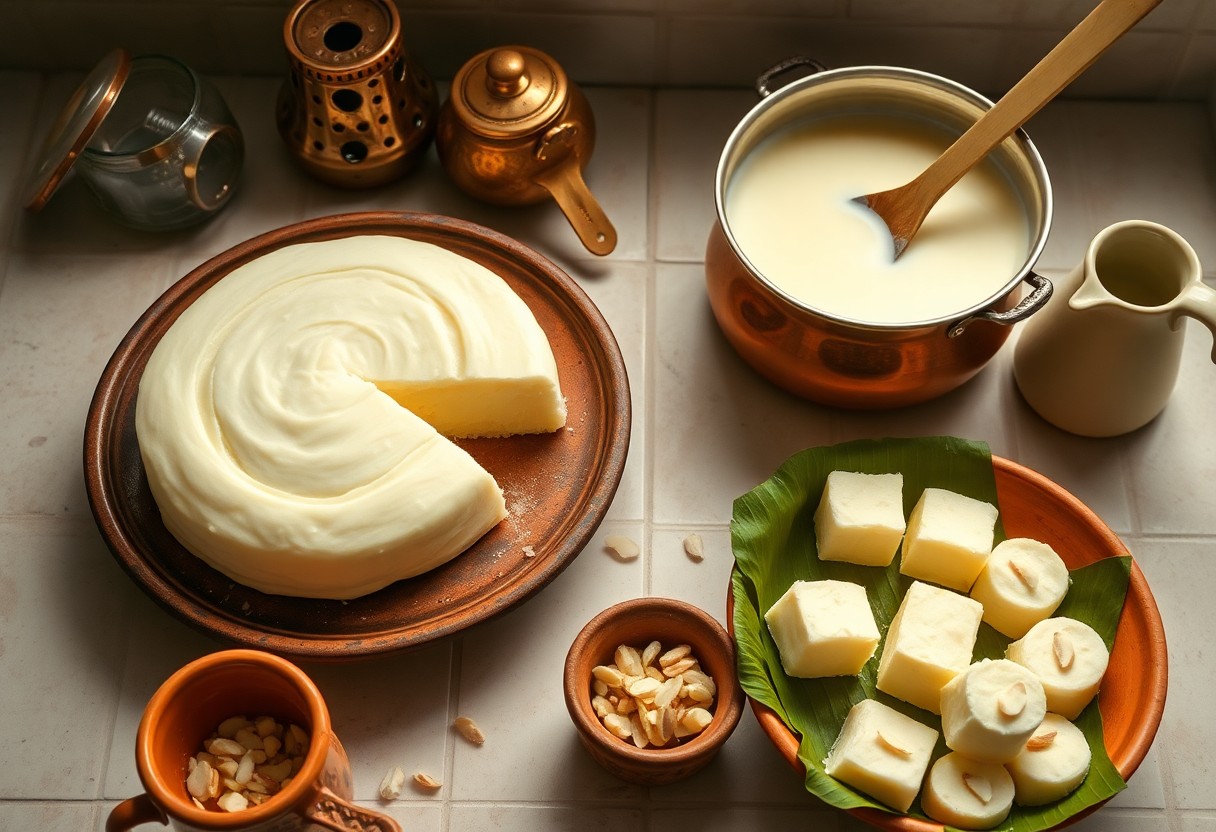
Techniques for Mawa-Based Delicacies
Mastering mawa’s moisture and gentle heat teaches you when to stop stirring, how to sieve for silkiness, and how to cool it for shaping; these hands-on techniques shape texture and shelf life of milk-based sweets you prepare.
Gulab Jamun: Structural Integrity and Syrup Balance
Balance dough firmness and frying temperature so you can achieve a uniform, crack-free interior that absorbs syrup evenly; test syrup thickness and cool syrup slightly before soaking to prevent sogginess and maintain shape.
Peda: Refining Density and Mouthfeel
Texture control comes from precise mawa consistency and gentle kneading so you shape pedas that are tender yet hold form; adjust sugar and warmth to tune melt-in-mouth quality you desire.
You should aim for mawa that’s low in moisture yet pliable; overcooked mawa yields dry, chalky pedas while undercooked mawa gives sticky, loose texture. Pinch tests and gentle rolling reveal density, and flavoring at the warm stage lets cardamom or saffron bind evenly. Cool slowly and store in airtight containers to preserve softness and aroma.
Infusing Traditional Aromatics
You coax floral saffron and warm cardamom into milk cake by steeping threads in warm milk and bruising green pods to release oils, timing infusions so aroma balances sweetness without bitterness.
Extraction Methods for Saffron and Cardamom
Saffron threads release color and scent when you gently crush them and steep in warm milk; cardamom you crack open, bruise the seeds, then infuse briefly to avoid astringency.
The Decorative Utility of Vark and Nuts
Vark gives you instant visual luxury while nuts add texture and toasty aroma; press sheets onto cooled surfaces and affix chopped pistachios or almonds to highlight concentric patterns.
Nuts contribute flavor, mouthfeel, and structural contrast: you toast pistachios for buttery notes, roast almonds for crunch, and chop cashews for creamy pockets; arrange sizes evenly so pieces don’t sink and pair them with vark for an elegant finish.
Quality Retention and Storage
Factors Affecting the Longevity of Milk Sweets
Humidity and sugar balance determine how long your milk sweets last; storage temperature and sanitary handling also matter. The right refrigeration and sealed containers extend freshness.
- Temperature control
- Moisture levels
- Hygiene during preparation
Optimal Packaging for Texture Preservation
Packaging that seals out air and moisture helps you preserve the milky crumb and prevent sogginess; waxed paper and airtight boxes work well.
Layering thin parchment between pieces prevents sticking and preserves mouthfeel, and vacuum sealing slows staling while avoiding heavy compression; you should cool sweets completely before packing and use rigid boxes to protect shape and control airflow.
Final Words
Taking this into account you ensure perfect milk cake and other traditional Indian sweets by controlling milk solids, gentle heat, precise sugar balance, patient stirring, and quality ghee or khoya; mastering timing and texture lets you reproduce authentic taste and silkiness every time.