With decades of generational recipes and immigrant ingenuity behind every bite, you will discover how Brampton became a hub for authentic Indian sweets; your exploration will reveal artisan techniques, regional ingredients, and the cultural rituals that sustain these confections, and you will learn where artisans source jaggery, ghee, and paneer, how seasonal festivals shape offerings, and why community trust matters to preserving taste and tradition.
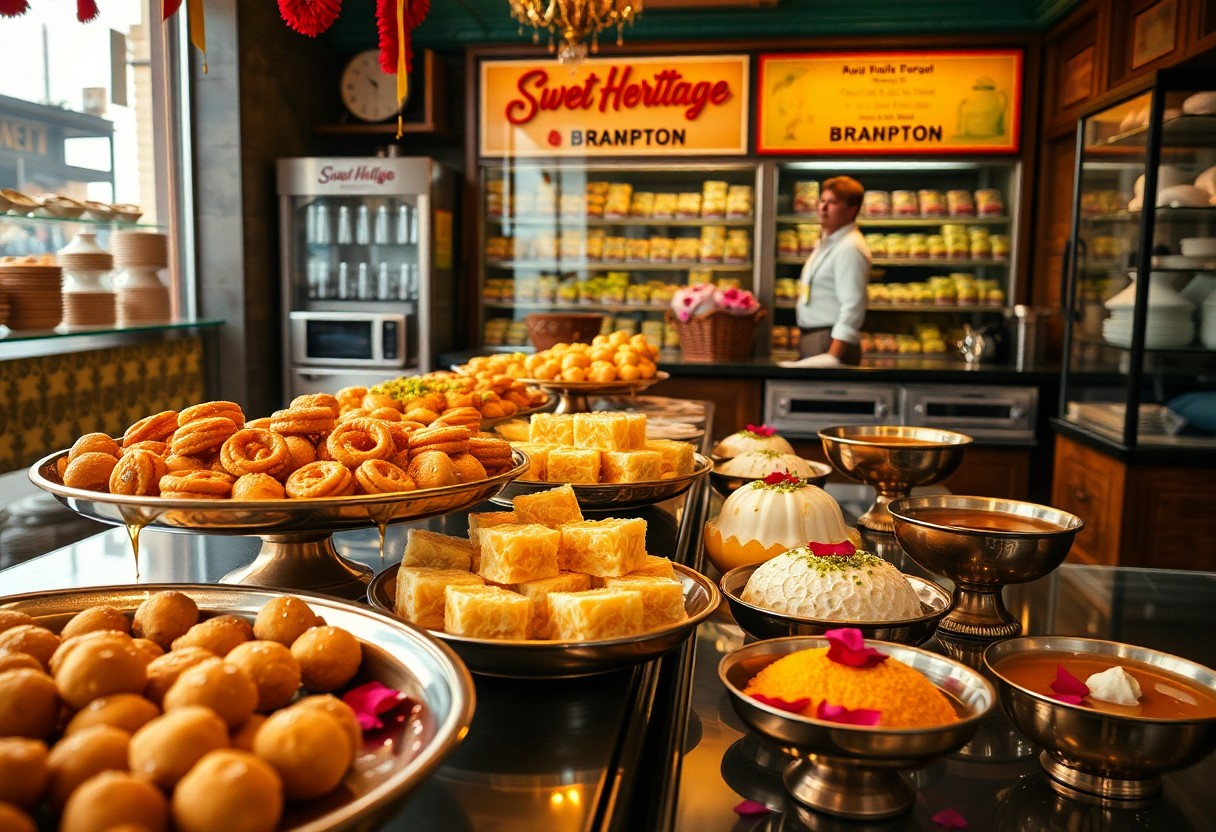
The Rich History of Indian Sweets
Historical Origins
Tracing back to Vedic times, you encounter honey, jaggery and milk-based confections mentioned in early texts, while sugar crystallization techniques appear in India by the 5th-6th century CE; you can then see Middle Eastern and Central Asian influences during medieval trade and the Mughal era, which popularized milk solids (khoya) and flavored syrups, giving rise to classics like peda, barfi, gulab jamun and jalebi.
Cultural Significance
Across festivals and life-cycle events, you’ll find sweets used as offerings, gifts and status markers: families commonly prepare 3-7 varieties for Diwali, laddoos mark newborn ceremonies, and mithai boxes are exchanged at weddings, signaling hospitality and social reciprocity that reinforce community bonds.
Regional identities shape those meanings-Bengali rasgulla (credited to Nobin Chandra Das, 1868) differs from Punjabi laddoo or Gujarati pedas-so when you buy or serve a specific sweet, you’re also invoking a region’s history and family lineage; in diasporic hubs like Brampton, sweet shops preserve recipes while catering events of 50-500 guests, sustaining cultural continuity.
Popular Indian Sweets in Brampton
Across Brampton’s neighborhoods you’ll find dozens of specialty sweet shops and bakery counters supplying festivals, weddings, and daily cravings. You can sample regional classics – milk-based North Indian mithai, coconut-barfi, Mysore pak – and modern takes like mango- or pistachio-infused pieces. During Diwali and wedding season many stores produce hundreds of pieces per day, while weekday demand favors single-serve treats and ready-to-eat boxes for your family.
Gulab Jamun
You’ll often find gulab jamun made from khoya or milk powder, hand-rolled into 2-3 cm balls, fried until mahogany, then soaked in warm rose-cardamom syrup. Traditionally served warm at weddings and festivals, they take about 15-20 minutes from frying to syrup bath in many Brampton shops. Some bakeries stuff them with pistachio or rabri to give your guests a richer bite.
Jalebi
You encounter jalebi as bright orange, crisp spirals made from fermented maida-yogurt batter, piped directly into hot oil and soaked in saffron-cardamom syrup. Vendors serve them hot with rabri or milk; in Brampton you can buy jalebi by weight or as single spirals for quick snacks. Shops aim to serve jalebi within minutes of frying so your piece stays crisp outside and syrupy inside.
Fermentation time for the batter typically ranges 4-6 hours, which gives jalebi its tang and lightness; many Brampton sweet-makers use the same schedule to produce consistent batches for morning markets. Traditionalists fry jalebi in ghee for aroma, but cost-driven outlets often use vegetable oil; you can judge quality by the sheen and how long the crisp shell holds before the syrup softens it.
The Ingredients That Define Authenticity
You’ll spot khoya (milk solids reduced by simmering), 100% desi ghee for its nutty aroma and ~250°C smoke point, green cardamom pods, saffron (10-20 strands per batch), whole pistachios and cashews, besan (chickpea flour, ~20-22% protein) and semolina; these elements dictate the texture, sweetness balance and the traditional flavor profile you expect.
Traditional Components
Khoya anchors pedas, barfis and gulab jamun, while besan and paneer provide structure in ladoo and sandesh; sugar syrup is boiled to one- to two-thread for syrupy gulab jamun and rabri is reduced to a ribbon consistency. You’ll also find rose water or kewra used sparingly and whole spices freshly ground for intense aroma.
Sourcing High-Quality Ingredients
You’ll prioritize milk from Ontario dairies (whole milk ~3.25% fat) for fresh khoya, choose clarified desi ghee over hydrogenated fats, and buy green cardamom pods and raw nuts from reputable wholesalers. Saffron from Kashmir or trusted importers, used judiciously, delivers color and aroma that mass blends cannot replicate.
Check labels for pasteurization and CFIA-compliant lot numbers, request traceability on spices, and buy nuts raw to roast in-house to control moisture and flavor. You’ll reduce adulteration risk by inspecting saffron strands and cardamom pods, store khoya refrigerated, and rely on ghee for frying to preserve mouthfeel and shelf stability.
Craftsmanship in Sweet Making
Time-Honored Techniques
You witness methods refined over decades: khoya is reduced by simmering milk until solids form-often taking 2-6 hours depending on volume-while sugar syrup is judged by the soft‑ball stage (≈112-116°C / 234-240°F). Artisans use brass or copper degchis and stone grinders to control heat and texture. For fried sweets you monitor oil at 160-180°C (320-356°F) to achieve even color and a tender interior.
Role of Family Recipes
Family recipes shape proportion, spice balance and finishing touches; you often find three‑ or four‑generation formulas encoded on index cards or taught at age nine. Small choices-1/4 teaspoon cardamom per kilogram of sugar, two strands of saffron per liter of milk, or resting dough 30 minutes-create distinct signatures. Bakers in Brampton protect these specifics to deliver the same texture and aroma your parents grew up with.
When recipes move from home to shop you see precise scaling: a household batch may become a 20‑kilogram vat, forcing adjustments in cook time and heat distribution. You learn that texture depends on timing-roasting besan an extra 5-7 minutes darkens flavor-and that chefs often keep a test sample for color and taste rather than relying on timers alone to maintain generational standards.
The Sweet Impact of Indian Sweets on Brampton’s Community
You encounter Indian sweets at every community touchpoint in Brampton: Diwali melas, wedding halls and Carabram stalls where thousands gather each year. These sweets support dozens of family-run shops and create seasonal employment, with vendors producing hundreds of mithai boxes for a single weekend. You see cultural continuity in every ladoo, and your festival orders help keep small bakeries economically resilient.
Celebrations and Festivals
At Diwali, Vaisakhi and wedding season you find streets filled with mithai stalls and community centres distributing hundreds of sweet boxes at langars and charity drives. Caterers often prepare dozens to hundreds of assorted sweets per event, and you can track demand spikes by how quickly vendors scale production during peak months.
Fusion Cuisine Trends
Local cafes and bakeries fuse mithai with Western desserts-gulab jamun donuts, ras malai ice cream and ladoo macarons now appear on menus across Brampton. You follow pop-up pastry collaborations on social media as specialty runs sell out, and notice mainstream chefs teaming with mithai makers to balance spice, syrup and texture in new offerings.
Chefs are swapping ghee for brown butter and folding cardamom, saffron and khoya into custards and ganaches, so you taste familiar mithai notes in cheesecakes and tarts. Weekend collaborations often source traditional khoya from sweet shops to produce limited-edition desserts, and you can order many fusion items for catering or market stalls that draw curious crowds seeking nostalgic yet novel flavors.
Where to Find Authentic Indian Sweets in Brampton
You’ll find authentic mithai concentrated around Bramalea City Centre, downtown Main Street and the strip plazas along Steeles and Queen Street, where dozens of family-run sweet shops and bakeries display fresh laddoos, barfi and jalebi; many have been serving the community for 15-30 years and cater to festivals, weddings and everyday cravings with both retail counters and bulk trays.
Local Sweet Shops
You can walk into traditional shops and ask for fresh samples of ghee laddoo, rasgulla or kaju katli; places along Main Street and Bramalea often list ingredient details and sugar levels, and several family stores that opened in the 1990s still make sweets daily on-site, offering custom boxes for events and pricing by weight (usually CAD 12-25 per pound).
Online Delivery Options
You’ll get most Brampton sweet shops and Indian bakeries on Uber Eats, DoorDash and SkipTheDishes, while many smaller vendors accept orders via phone or WhatsApp for same-day delivery across the city; expect delivery fees typically between CAD 5-15 and estimated arrival windows from 30 to 120 minutes depending on distance and order size.
For larger or customized orders you should pre-order: many shops require 3-7 days’ notice for wedding or festival boxes, and minimums for free delivery commonly run CAD 30-50; look for insulated packaging and live tracking, confirm refrigeration needs for dairy sweets, and ask about sample pieces or consumption timelines to ensure quality on arrival.
Summing up
Upon reflecting on Sweet Heritage – the story behind authentic Indian sweets in Brampton – you see how tradition, local sourcing, and family recipes preserve cultural identity while adapting to your community’s tastes. The bakery’s commitment to artisanal techniques and transparent sourcing gives you confidence in quality, and its role in festivals and everyday life shows how food connects generations and supports small businesses you can trust.